Updated July 2026
On this page
When to read food labels
To reduce the risk of an allergic reaction, check the ingredient list and all allergen statements on packaged food and drinks.
Allergy & Anaphylaxis Australia advise people to check the food label of packaged food and drinks 3 separate times:
- When buying the food or drink

- When unpacking the food or drink at home

- Before eating, drinking or using the food or drink in cooking

Be aware that ingredients can change without warning. A food that was safe might not be safe the next time you buy it.
Even if the front of pack has a “free from” claim, always check the ingredients.
Do not assume the ingredients of a product by its name. Check ingredients and allergen statements.
What are the rules on food labelling?
Food allergen labelling laws in Australia are set by Food Standards Australia New Zealand (FSANZ). This is called the Food Standards Code. The Code includes rules about what must be included on the label, the order of ingredients, common food allergens and how the information should be displayed.
Common food allergens must be listed on the label when the allergen is:
- an ingredient
- part of another ingredient (compound ingredient)
- a food additive or a processing aid
Food does not need a label if it is prepared on site and served by cafés, restaurants, takeaway outlets or bakeries. However, the seller must provide accurate information about common food allergens when the customer asks.
What are Plain English Allergen Labelling laws?
Plain English Allergen Labelling (PEAL) laws state how and where common food allergens must be shown on packaged food and drinks. The common food allergens include:
- milk
- egg
- peanut
- sesame
- soy
- wheat
- crustacean
- mollusc
- fish
- almond
- Brazil nut
- cashew
- hazelnut
- macadamia
- pecan
- pistachio
- pine nut
- walnut
- lupin
Gluten and sulphites (equal to or more than 10mg/kg added) must also be labelled on packaged food. If other grains that contain gluten are in the food – barley, rye, oats – they must be in the ingredient list. For these grains, only gluten is used in the summary statement.
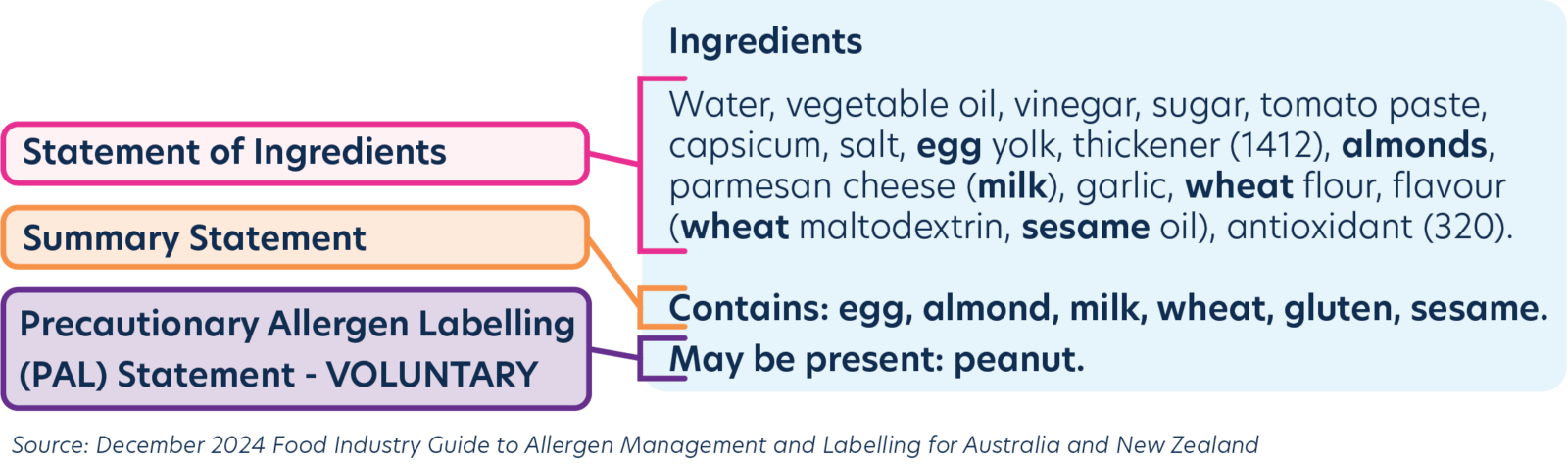
Common food allergens must be:
- Included in bold in the ingredients list
- In plain English, such as ‘’milk’’ NOT casein or whey
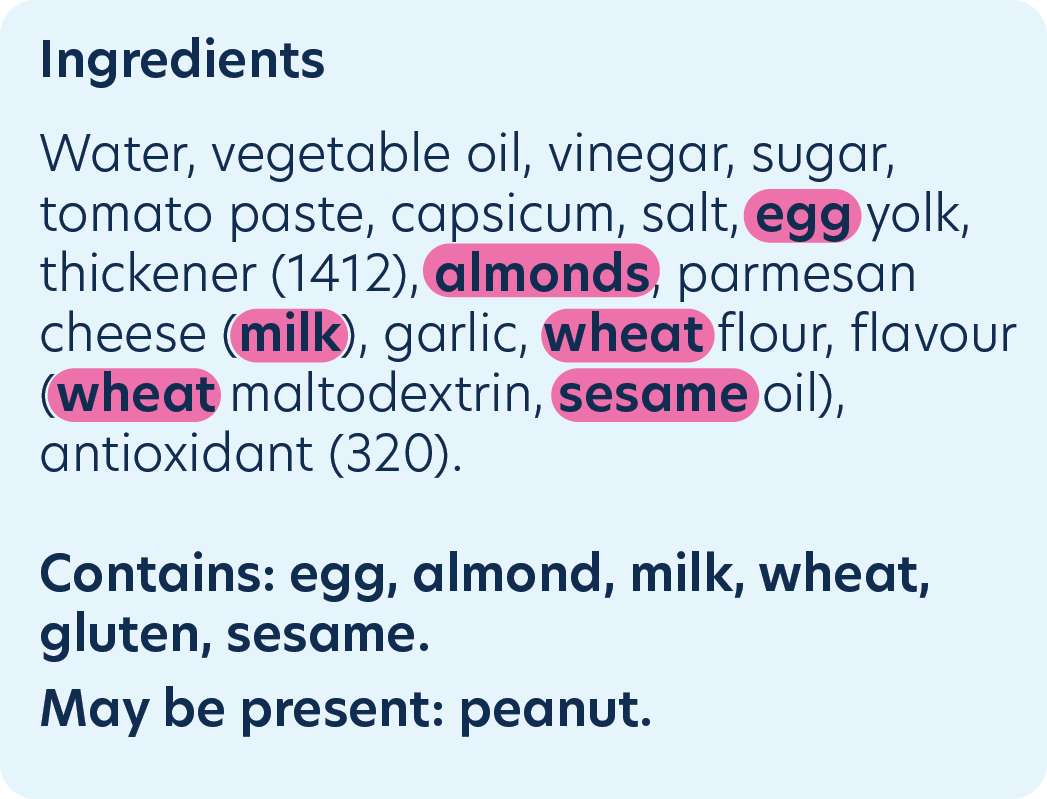
- listed in a separate allergen summary statement in bold which starts with the word “Contains…:”.
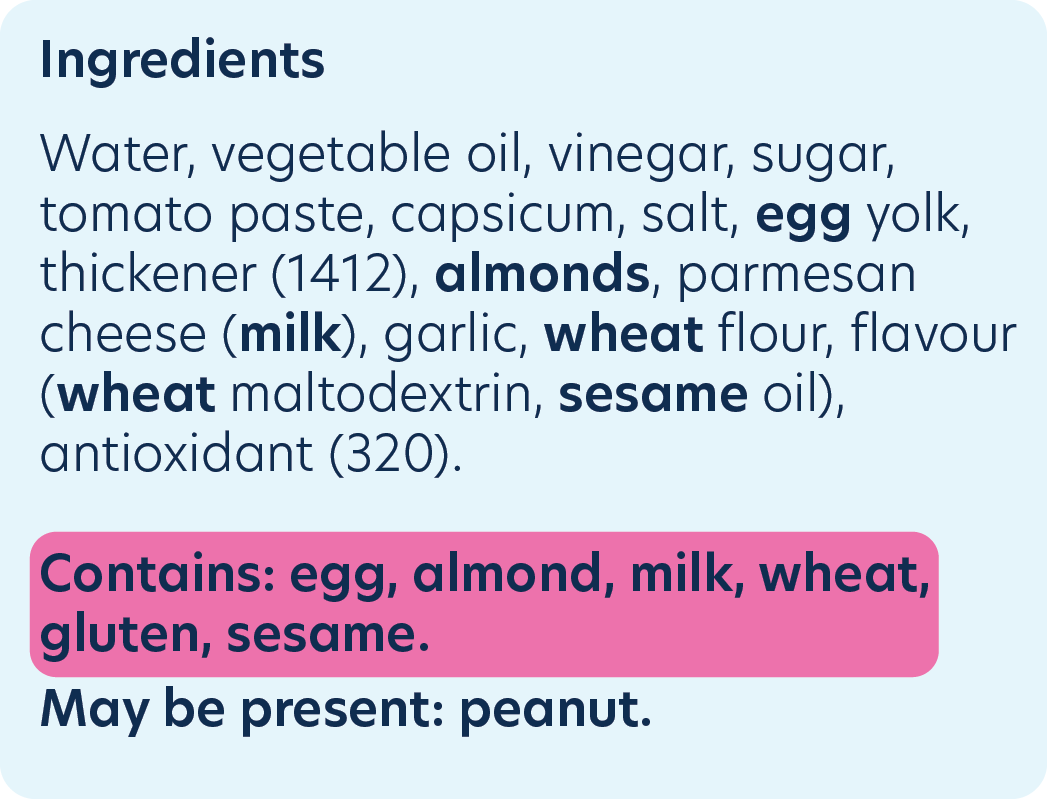
Packaged foods imported into Australia must also be labelled in this way.
- glucose syrups made from wheat starch (exempt from declaring wheat)*
- fully refined soybean oil (exempt from declaring soy)
- the soy derivatives tocopherols and phytosterols (exempt from declaring soy)
- distilled alcohol from wheat or whey (exempt from declaring wheat or milk).
* Glucose syrups must have no more than 20 mg/kg detectable gluten to meet the requirements for an exemption from the mandatory labelling of wheat.
- beer or spirits do not have to declare barley, rye, oats or wheat
- fish does not have to be declared for isinglass derived from swim bladders and used as a clarifying agent in beer or wine.
How are uncommon food allergens labelled?
If you have an allergy to a less common food allergen (all other food that is not a common allergen) such as kiwi, chicken, or potato, check the ingredients list. If it is an ingredient used to make the product, it should be listed in the ingredients but will not be bold or included in the summary statement. BUT…
If an ingredient is not a common allergen and it is part of a compound ingredient that makes up less than 5% of the final product, it is not required by law to be listed in the ingredient list. A compound ingredient is made up of two or more separate ingredients.
An example of a compound ingredient that could make up less than 5% of the total food is tomato paste (made from tomatoes, salt, sugar and herbs) in the pizza sauce on a frozen pizza.
Ingredients can also be listed as a group. Examples include:
- “spices” listed without naming which spice
- “fruit powders” (such as used in a meat rub) will not state which fruit has been used
- “herbs” listed without naming the individual herb.
The ingredients used to make these groups of food can change. It is important to avoid food with grouped ingredients if you are allergic to an ingredient that may be included.
Allergy & Anaphylaxis Australia advises that people shopping for someone with food allergy should read:
Calling a manufacturer for information about a packaged food
If you have questions about a product, contact the manufacturer listed on the label of the product to ask about the exact contents and whether there is any risk of cross contamination.
The Food Allergy Aware website has more information on reading food labels, Plain English Allergen Labelling (PEAL) requirements and Precautionary Allergen Labelling (PAL) statements.
Why read the label of every product, every time?
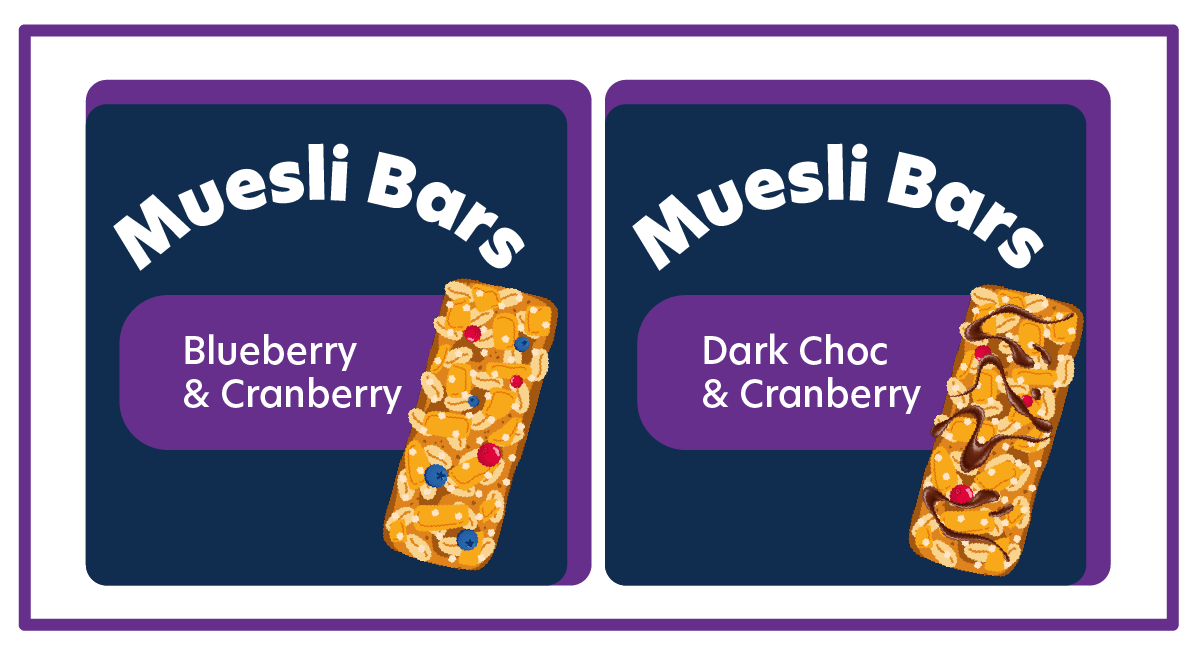
Different varieties of the same, or a very similar food product contain different allergens.
This often occurs with foods such as muesli bars, biscuits and chocolate.
Example: Muesli bars without dark chocolate, muesli bars with dark chocolate
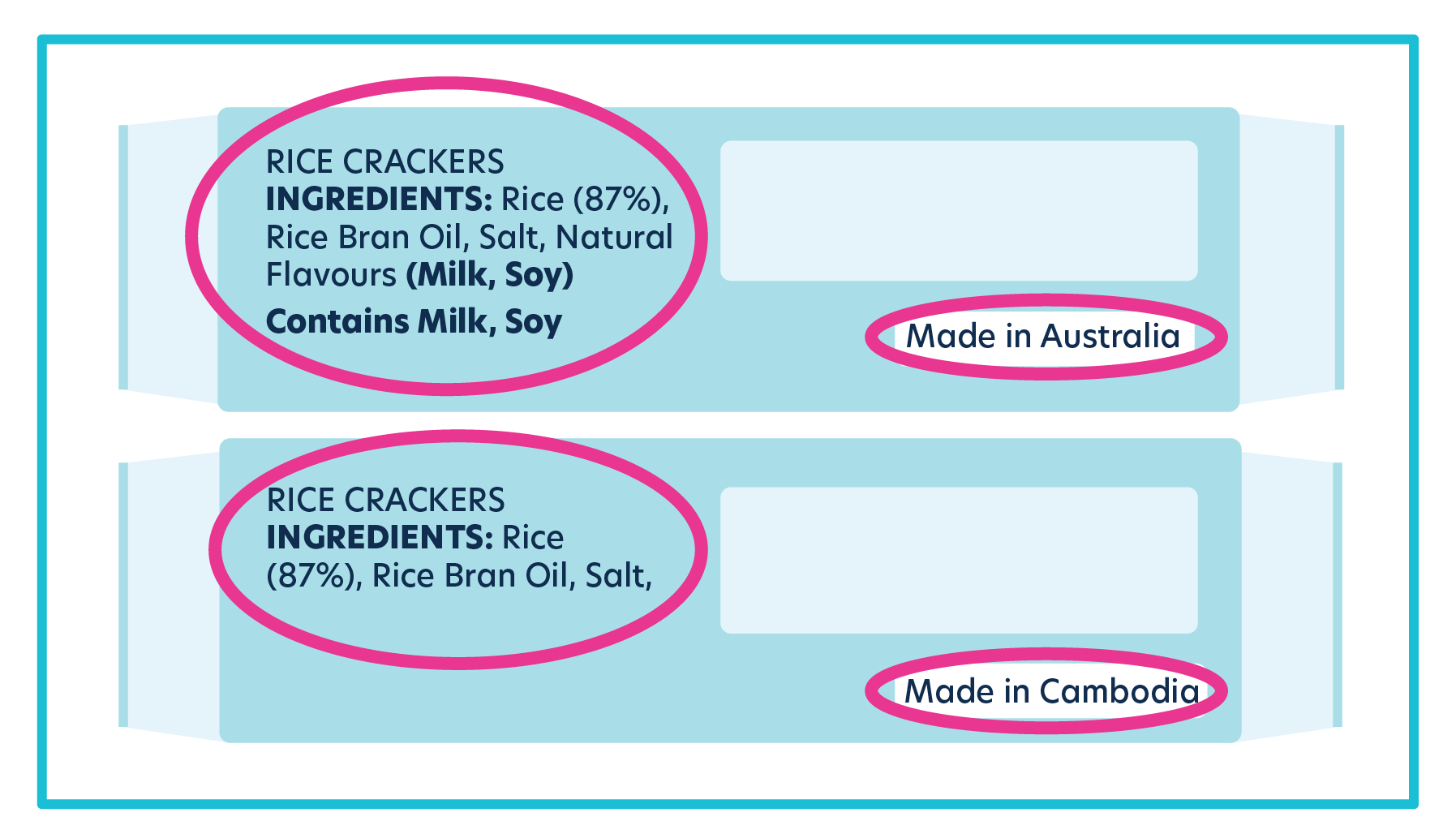
Imported foods can be almost identical to locally produced brands or two products made in different countries might be imported at the same time.
Branding and the appearance of packaging may be very similar, but the allergen content, including the PAL statement, can differ.
Example: The rice crackers pictured were purchased from the same store on the same shelf. One contains milk and soy and the other does not list milk or soy in the ingredient list or the summary statement.
The products were sold in the same grocery store but made in different countries – the top product was made in Australia, the bottom product was made in Cambodia.
Sometimes, importers purchase large amounts of a packaged food, such as chocolate bars, from another country, even though that same product is available in Australia. The products can look the same but may have different ingredients and PAL statements. The importer then sells the product through dollar shops and small convenience shops at a cheaper cost. This is called parallel importing.
Sometimes, food products that appear to be the same, but have different allergens, are on the shelf at the same time.
The same food product may contain different allergens according to the packaging size or type.
This is because manufacturers sometimes need to change the ingredients to suit the size and type of packaging.
Example: the ingredients used in a product packaged in a can may differ from a larger pouch of the same product.
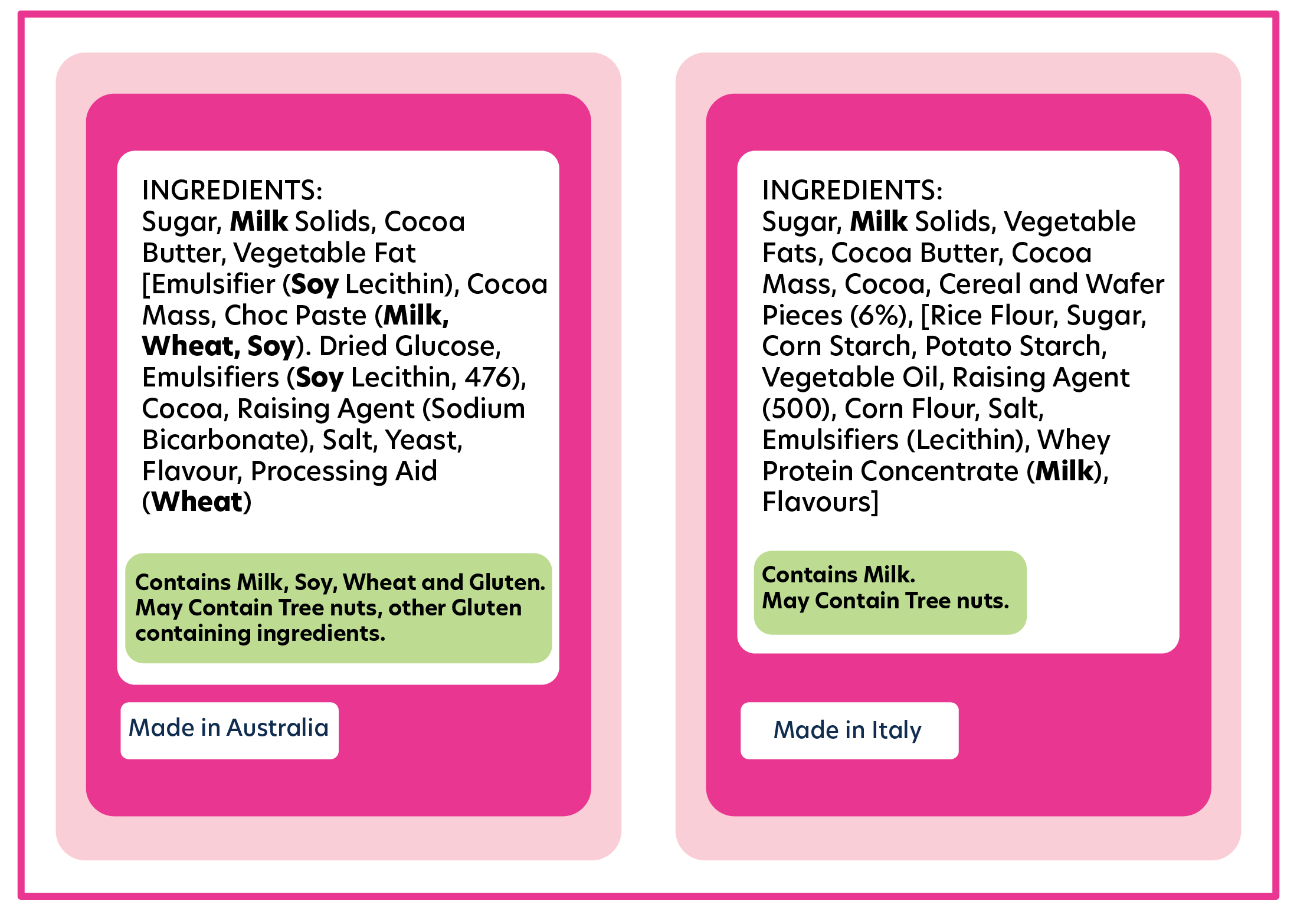
Food allergens may be different because food manufacturers may have several manufacturing sites both in Australia and overseas.
This means food allergens, including in PAL statements, can vary depending on the factory a product is made in.
Example: The product made in Italy does not contain wheat or soy as an ingredient, but a similar product made in Australia contains wheat and soy.

It is often difficult for Australia to operate ‘allergen free’ manufacturing sites due to the relatively small number of people (compared to the US or UK, for example) and higher costs.
Product recipes can change. An allergen can be added or removed from the recipe.
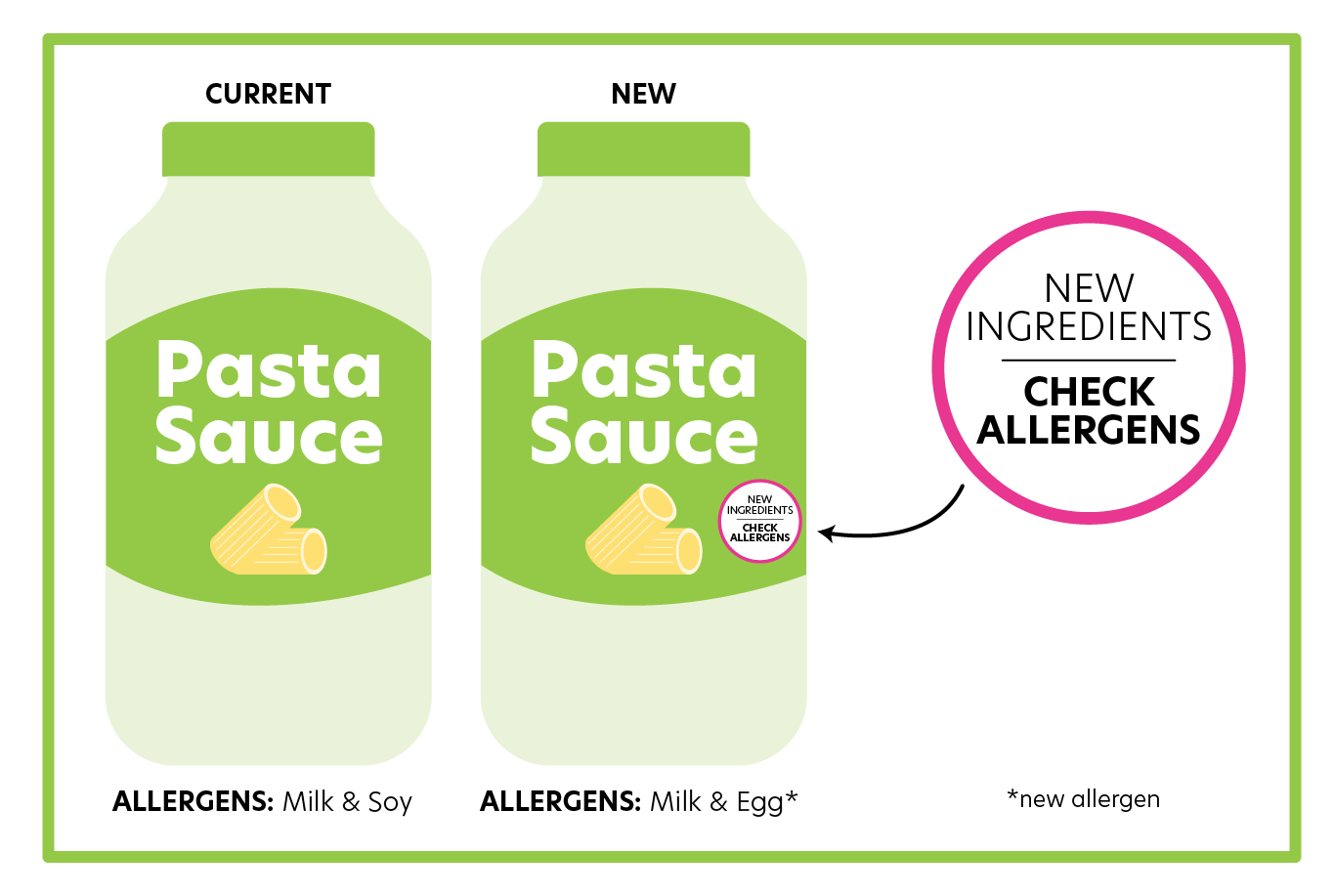
Food manufacturers that make changes to their ingredients are encouraged to add a warning about different allergen content to the front of the pack or that the product is being made to a new recipe, to remind people to check the label in case an allergen has been added (or in some cases, removed). There is no law saying companies must alert customers about a change in the ingredients of a product, however, the ingredient information must be correct.
We encourage companies to consider the A&AA paid service of alerting people with food allergy to changes in their allergen labelling through social media posts, email and website information. Example:
What are unexpected food allergens?
Packaged products sometimes have common food allergens that are unexpected.
Examples include:
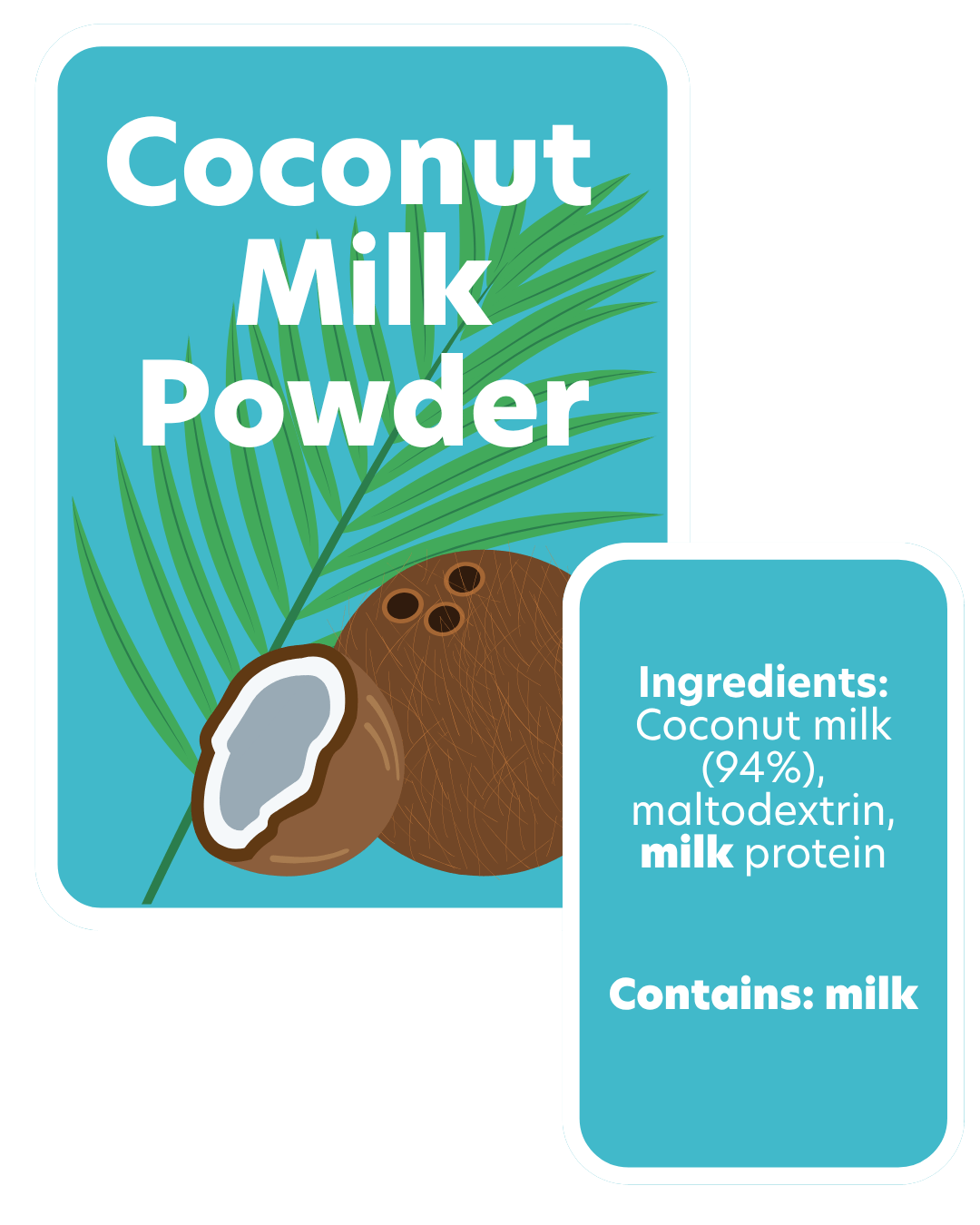
Coconut milk powder
Coconut milk powder can contain cow’s milk (dairy).
These products must be labelled with milk listed in the ingredients and have the statement ‘Contains milk’.
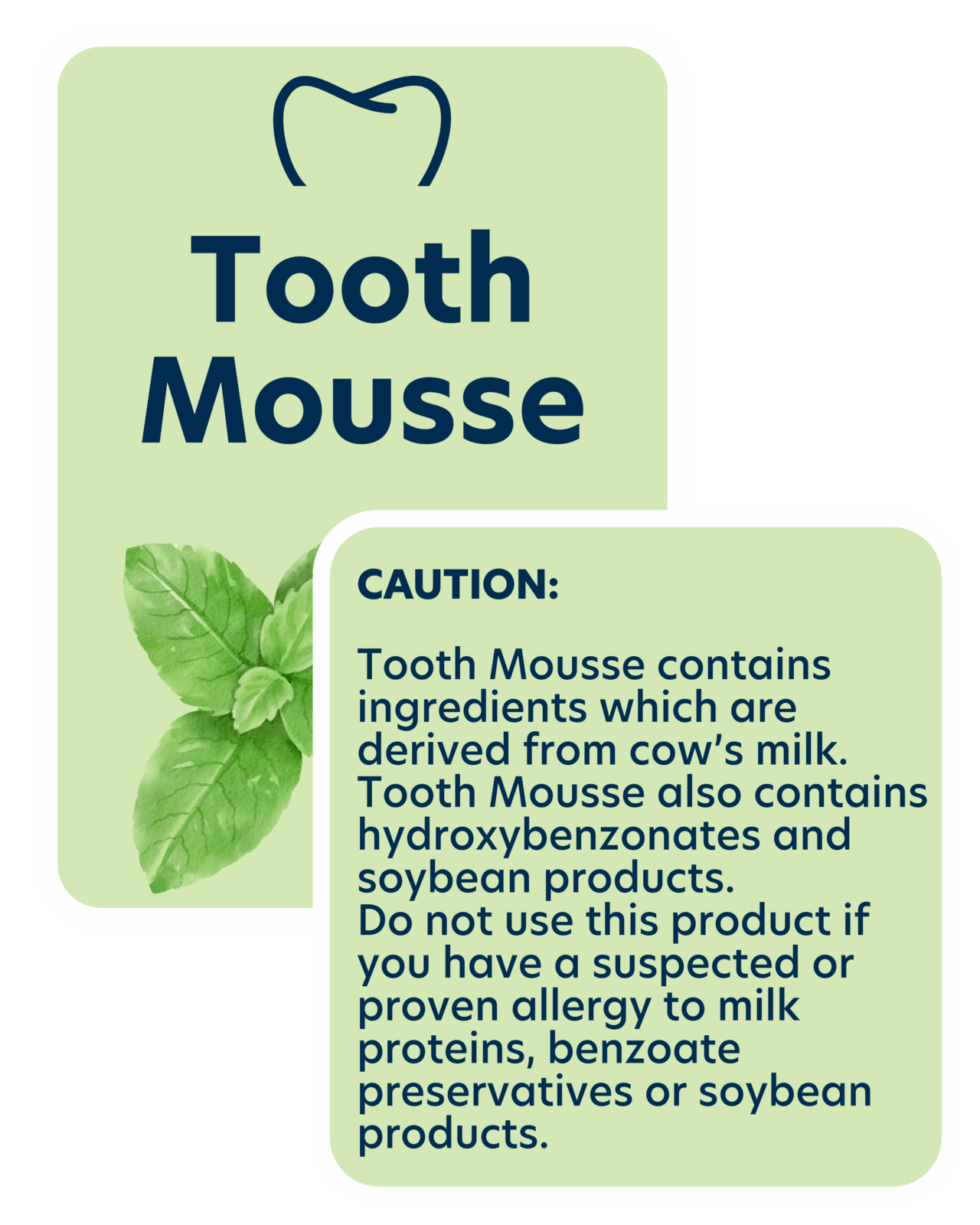
Tooth mousse
Tooth mousse contains an ingredient made from milk, as well as soy products, and is not suitable for people with these allergies. Tooth mousse is not a food so has different labelling requirements, but milk and soy must still be listed if an ingredient.
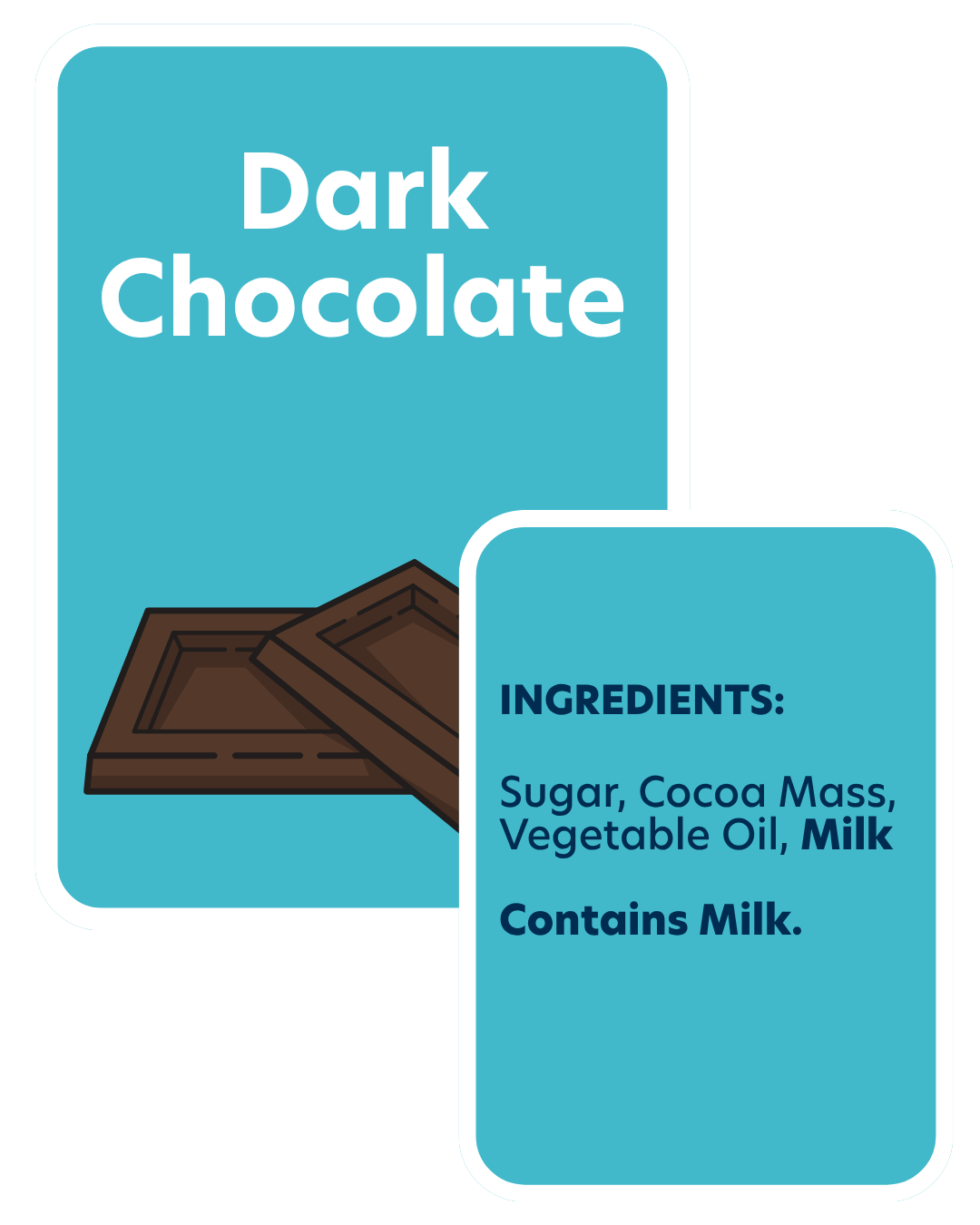
Dark chocolate
Dark chocolate has a very high risk of cross contamination with milk if other products containing milk are made on the same processing line. Some dark chocolate products will include milk as the last ingredient in their ingredient list and others will list milk as a cross contaminant in their Precautionary Allergen Labelling (PAL) statement.
Grocery shopping online
When grocery shopping online through a supermarket or online delivery service, always check the ingredients and allergen statements of the products you receive. Do not rely on the product information on websites.
Reporting an allergic reaction to a packaged food
Food Standards Australia New Zealand (FSANZ) sets the standards in the Food Standards Code for the sale of safe food in Australia.
Each state and territory has the responsibility to make sure the Food Standards in the Code are followed. If you have an allergic reaction to a packaged food that does not contain the food you are allergic to in the ingredient list, it can be reported to the state or territory health department where the food was manufactured (made) or imported into.
For information see how to report or contact us through our National Allergy Helpline.