
On this page:
What is Jext®?
Jext® is an adrenaline injector device which contains the medication adrenaline (epinephrine).

ADRENALINE IS LIFE SAVING medication for someone experiencing a severe allergic reaction (anaphylaxis).
Adrenaline is the first line emergency treatment for anaphylaxis. Adrenaline devices are designed to be used by anyone in an emergency.
Adrenaline is a natural hormone made by our bodies but in anaphylaxis, our body cannot make and release enough adrenaline to reverse the potentially life-threatening allergic reaction. For this reason, we need to give more adrenaline through a device such as Jext®.
A Jext® device contains one dose of adrenaline.
What doses are available for Jext®?
The dose of Jext® is worked out by weight. Weight guidelines for adrenaline devices can be found on the bottom of the ASCIA Action Plan for Anaphylaxis.
Babies and children 7.5 – 20kg
Jext® Jnr 150mcg
Children and adults over 20kg
Jext® 300mcg
How is Jext® packaged?
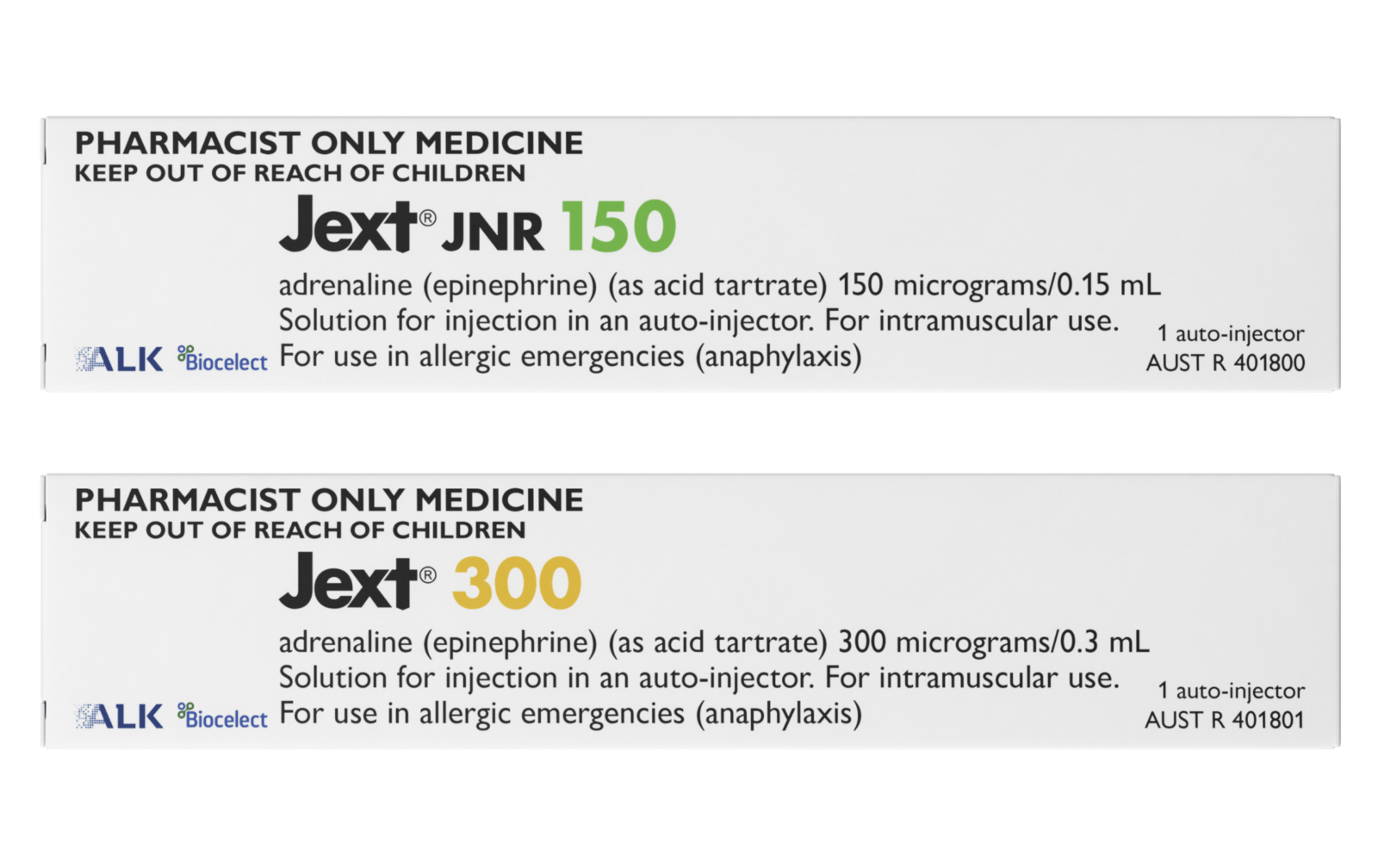
Each Jext® you receive from the pharmacy will be in a cardboard box. Each cardboard box contains one Jext®. If you buy two Jext® devices, you will get two boxes.
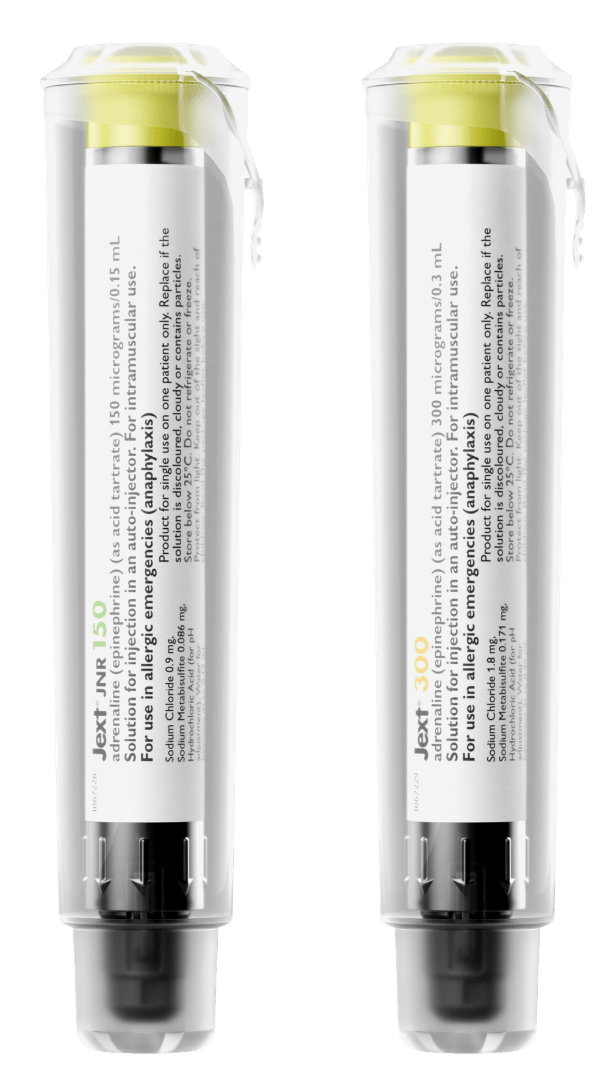
Inside the box is a clear hard plastic case which contains the Jext®. The clear case enables you to see a yellow border for a Jext® 300mcg and a green border for a Jext® Jnr 150 mcg. Both the Jext® 300mcg and the Jext® Jnr 150 mcg have clear case lids.
The caps of both Jext® doses are yellow in colour. Keep your Jext® in the case until you need to use it.
To remove the Jext® from the case, flip the clear lid up and slide the Jext® out. Once the Jext® has been removed from the case it is ready to be used.
What does Jext® look like?
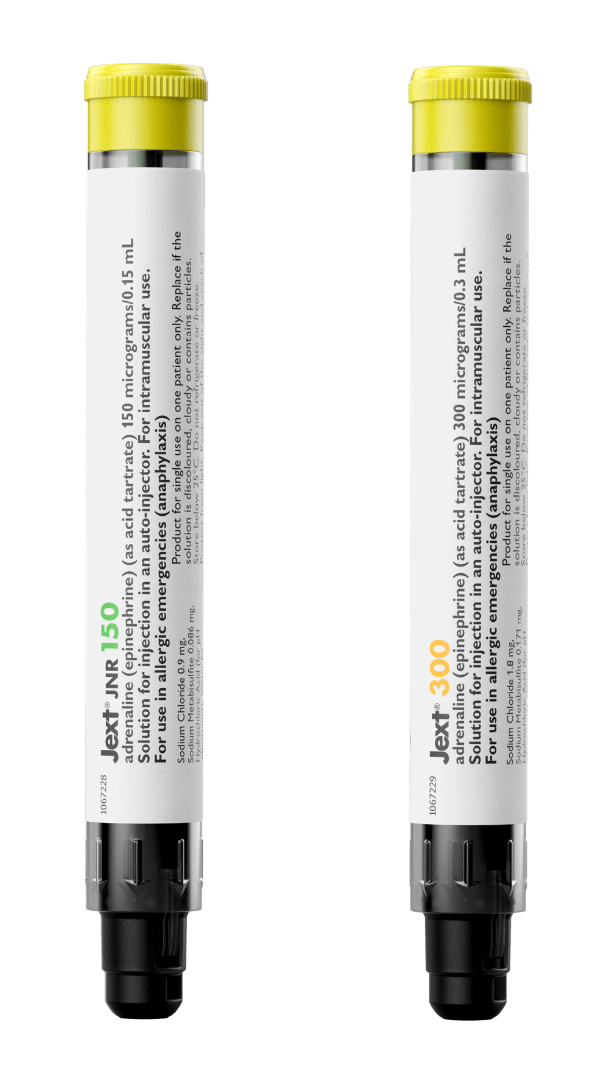
On the Jext® device you will see:
- The label on Jext® has a yellow border and on Jext® Jnr has a green border
- Instructions for use
- An expiry date
- A viewing window to check if the solution inside is still clear. The solution visible in the Jext® inspection window should be clear and colourless and should be checked periodically. Do not use Jext® if the contents are cloudy, coloured or contain sediment, as these changes may indicate reduced effectiveness of the medicine. However, if this is the only device available it should be used.
After Jext® has been used, the needle shield extends over the needle, and the viewing window will be filled by a plastic rod to confirm that the adrenaline has been injected. Jext® has a white plastic rod and Jext® Jnr has a blue plastic rod.
Jext® before it has been used.
Jext® after it has been used. Note the needle is not exposed.
Jext® Jnr (150 mcg) has a green border on the label and a clear case lid.
Jext® (300 mcg) has a yellow border on the label and a clear case lid.
How to give Jext®
Instructions on how to give a Jext® can be found
- on the ASCIA Action Plan for Anaphylaxis for Jext®
- on the Jext® device
- via QR code on the ASCIA Action Plan/First Aid Plan which takes you to the ASCIA website where there are instructions on how to use Jext®
Once the Jext® device is removed from the case, it is ready to be used. Follow the 3 steps below:
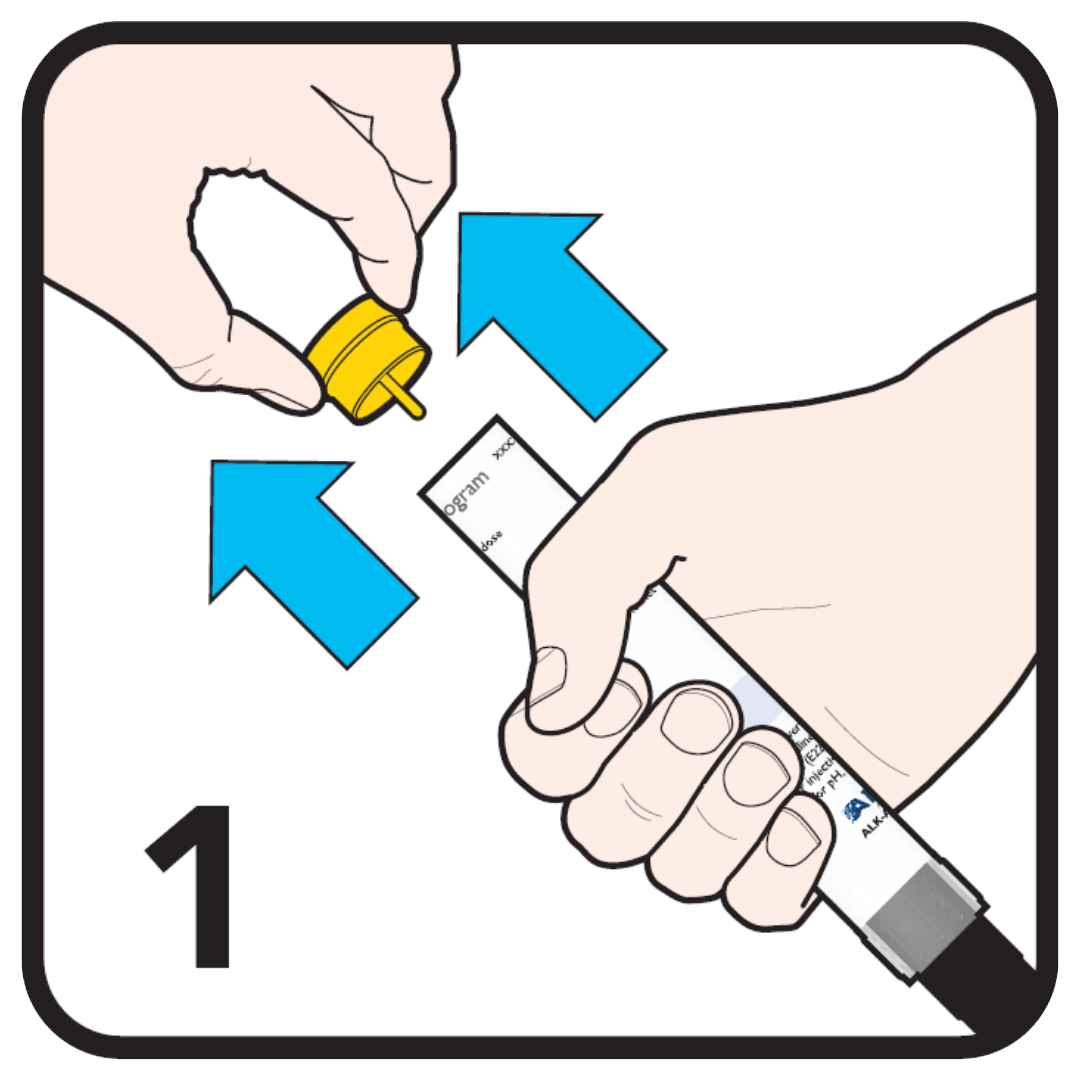
Form fist around Jext® and PULL OFF YELLOW CAP
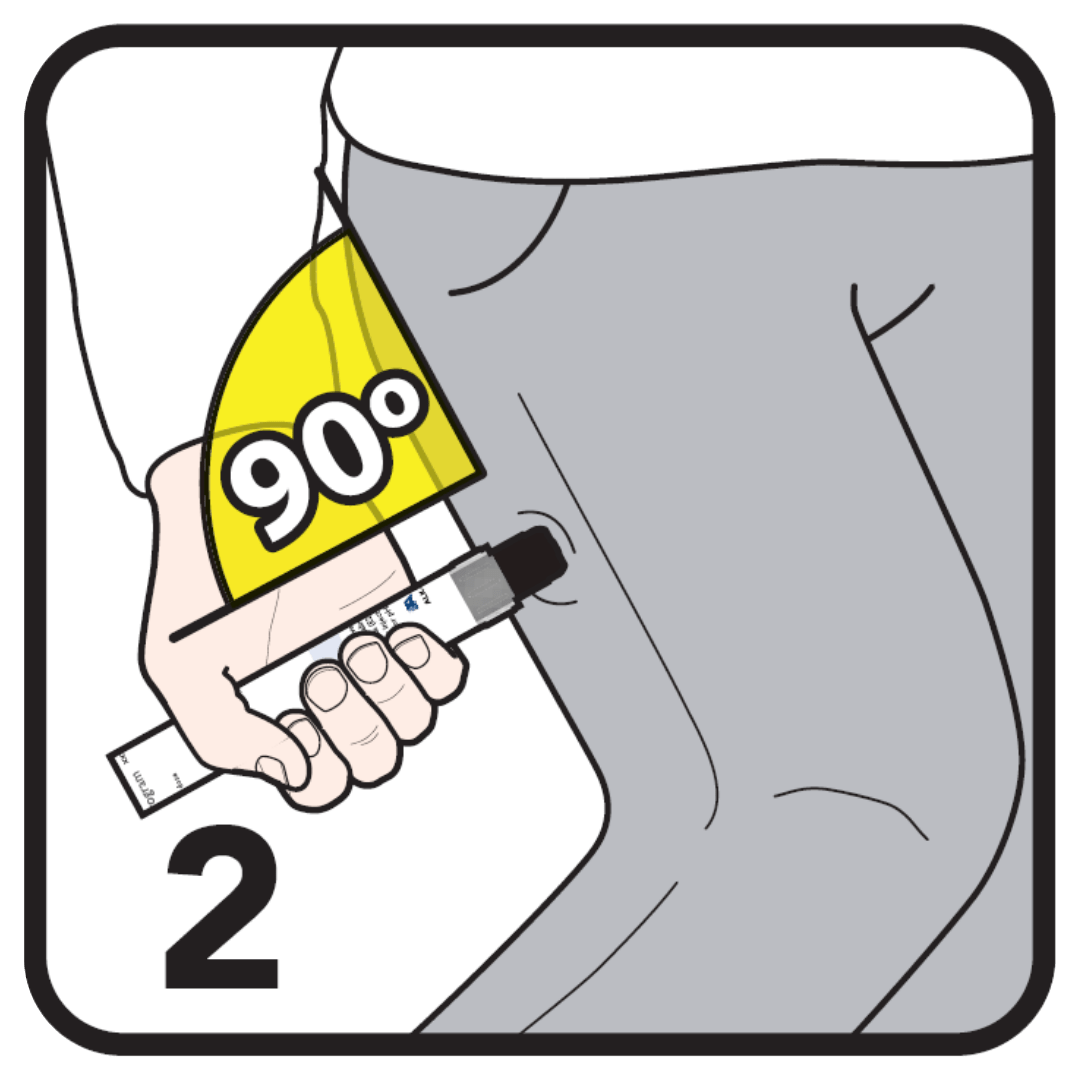
Place black injector tip against outer mid-thigh (with or without clothing)
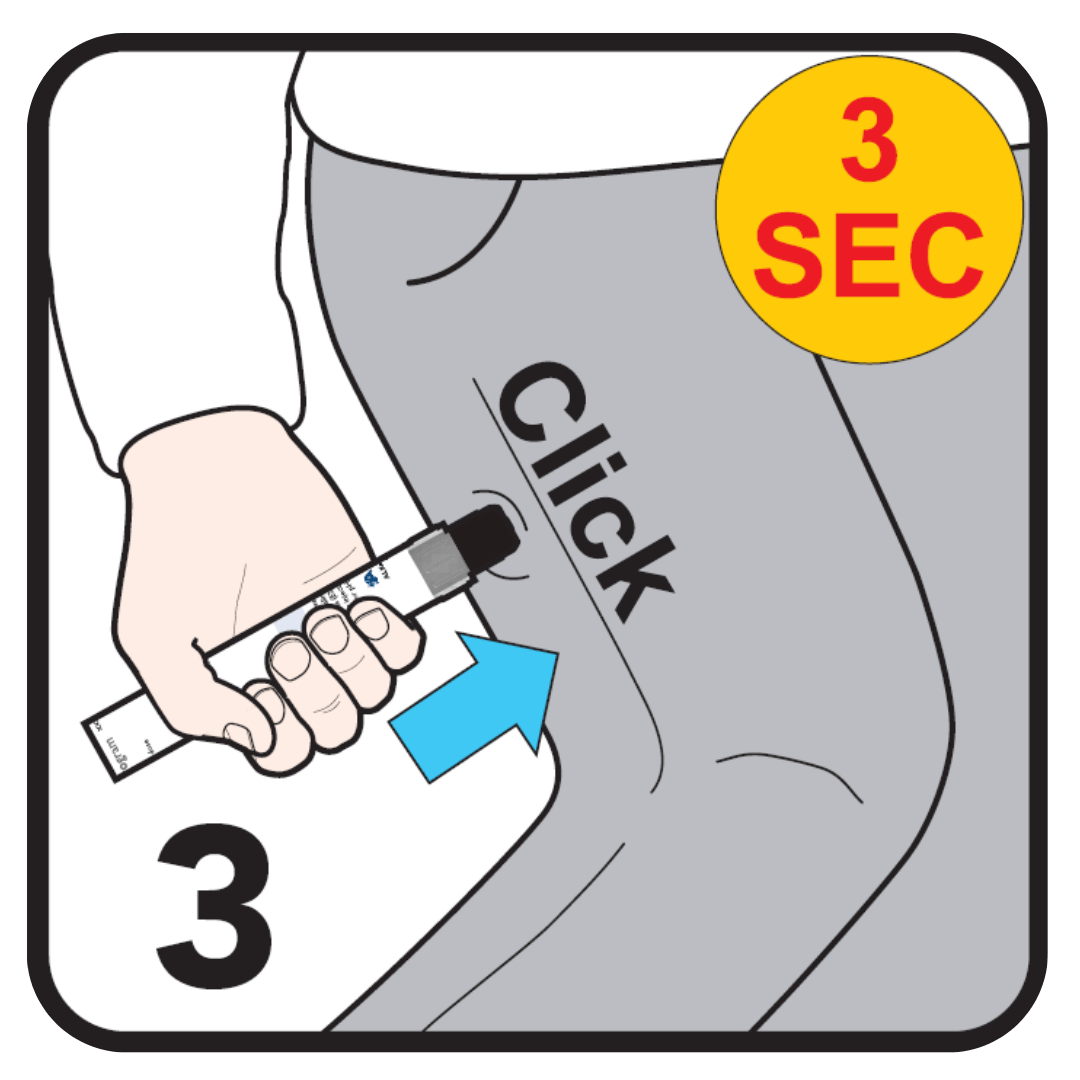
Push black tip firmly until a click is heard and hold in place for 3 seconds.
Remove Jext®
Jext® is given into the outer mid-thigh
There is a large muscle in the outer mid-thigh. Injecting adrenaline into this muscle helps get the adrenaline to the rest of the body quickly. The adrenaline device can be given through clothing.
Remember: hold the leg still if you are giving an adrenaline device to someone else as they may move unexpectedly.
For videos about anaphylaxis management, visit our resources page.
How to store Jext®
Jext® adrenaline devices should be stored within the clear flip-top case.
They should be stored or kept:
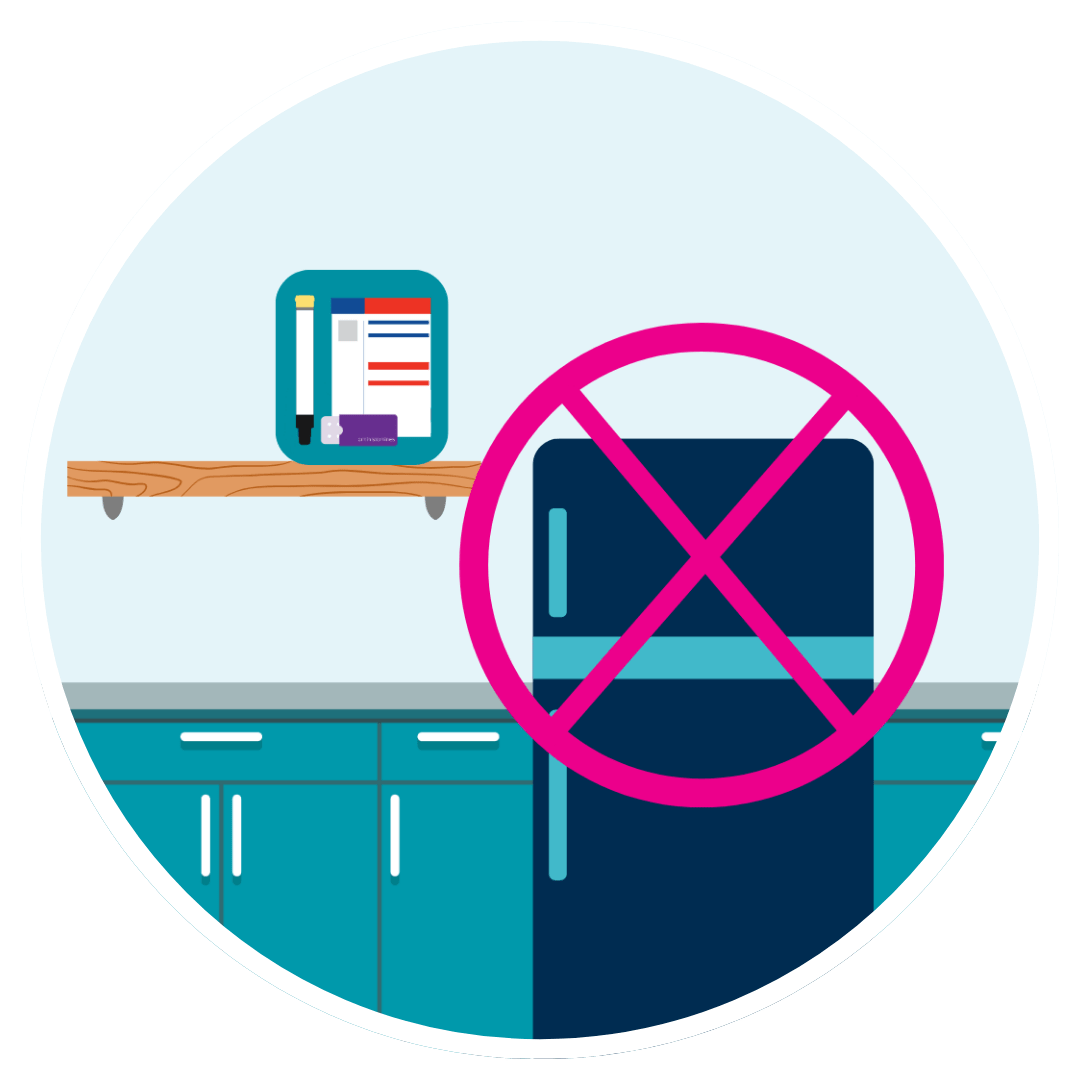
Store below 25°C. Do not refrigerate or freeze.

Protect from light.

In an unlocked, easy to get to place (out of reach of small children).
Jext® expiry dates
Jext® Jnr and Jext® both expire 22 months from when they are made overseas.
The expiry date can be found on the Jext® box and on the Jext® device.

Expired Jext® devices do not work as well as in-date devices and should not be relied on to treat anaphylaxis. However, an expired Jext® should still be given if it is the only adrenaline device available.

Make a note of when your Jext® devices are due to expire and book an appointment for a new prescription with your health professional.
If you use your Jext® make sure you replace it as soon as possible .
Jext® Trainer Device
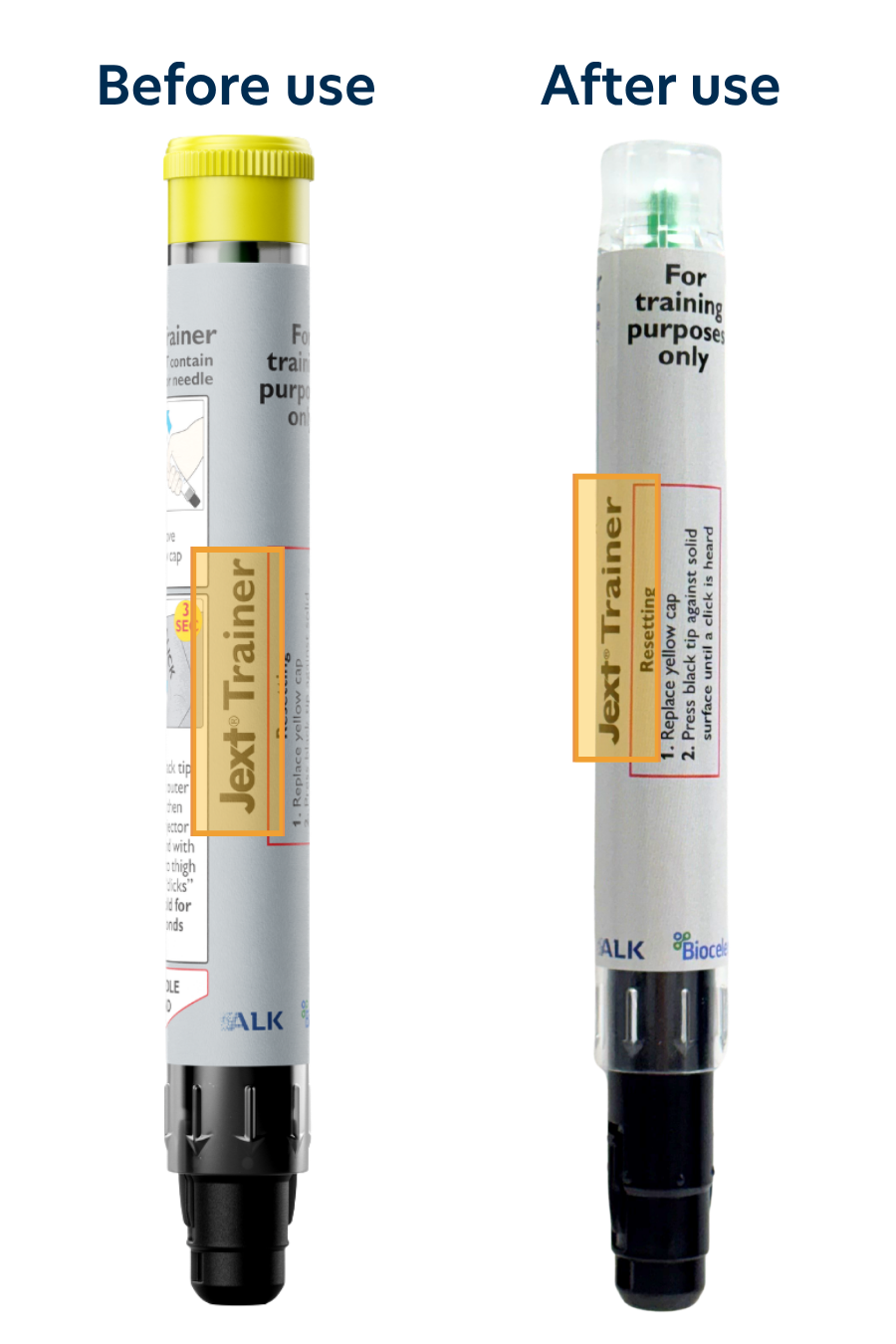
It is important to know how to give Jext® in an emergency. Using a Jext® trainer is a great way to do this. The Jext® trainer contains no needle or medication and can be reused (unlike the real Jext® used in an emergency which contains only one dose of adrenaline and cannot be reused).
If your child is at risk of anaphylaxis, practising with them could help you think about and role-play how you need to hold them if you had to give Jext® in an emergency. It may also help the child understand what would happen if they had anaphylaxis and needed to have adrenaline given.
It is important to store the Jext® trainer away from the real Jext®. You can mark the Jext® trainer with tape or a sticker to highlight that it is not the real Jext® containing adrenaline and a needle.
To reset the Jext® trainer after practising, replace the yellow cap on the trainer pen. Press the black end firmly on a hard surface until it retracts back into place. You will hear a ‘click’ at that point indicating the trainer pen has been re-set.
Frequently asked questions (FAQ)
Using an adrenaline device FAQ
Allergy & Anaphylaxis Australia answers common questions about using an adrenaline (epinephrine) device.
Buying an adrenaline device FAQ
Allergy & Anaphylaxis Australia answers common questions about buying an adrenaline (epinephrine) device.
Learn more about adrenaline and adrenaline devices
Adrenaline Hub
Learn about how adrenaline works and how to use adrenaline devices like Anapen®, EpiPen® and neffy®.
Anapen®
Learn about Anapen®, how adrenaline works, how to use Anapen® and more.
EpiPen®
Learn about EpiPen®, how adrenaline works, how to use EpiPen® and more.
neffy®
Learn about neffy®, how adrenaline works, how to use neffy® and more.
Preparing for an emergency
Learn more about preparing for a severe allergic reaction (anaphylaxis) and what to expect if you or a loved one experiences anaphylaxis.