
Updated April 2025
On this page
If you or the person you are with are showing any signs of a severe allergic reaction
What is Anaphylaxis?
Anaphylaxis is the most severe form of allergic reaction. It affects either a person’s airway and how they breathe, and/or the way blood is moved around the body (blood pressure). It is potentially life threatening and must always be treated as a medical emergency.
The most common causes of anaphylaxis are food, medications and insects. The things that cause or trigger anaphylaxis are called allergens.
The best way to recognise anaphylaxis is by using the ASCIA Action Plan to identify the signs.
Signs of anaphylaxis
Any ONE of the below signs affecting a person’s airway or breathing, or a change in the way blood moves around the body, is a sign of anaphylaxis.
Signs that show the person’s airway and/or breathing has changed:
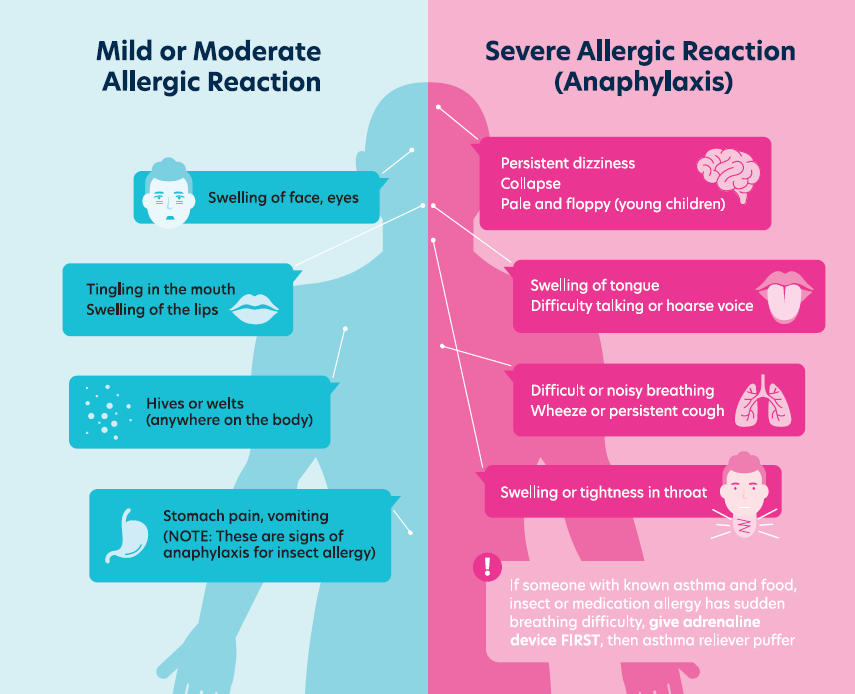
- Difficult or noisy breathing
- Swelling of the tongue
- Swelling or tightness in throat
- Wheeze or persistent cough
- Difficulty talking or hoarse voice
Signs that show that there has been a change in the way blood moves around the body:
- Persistent dizziness or collapse
- Pale and floppy (young children)
Special note about insect allergy:
- As well as breathing and blood pressure symptoms stated above, abdominal pain and/or vomiting are also signs of anaphylaxis in insect allergy. For more information go to our insect allergy page.
People need to breathe to stay alive, people need blood to get to their heart, lungs and brain to stay alive. If any one sign listed above is present, treat as anaphylaxis. People can have one or more of the above signs which mean they are having anaphylaxis.
Skin symptoms such as hives or facial swelling are not always present when someone has anaphylaxis, or they can develop after a sign/signs of anaphylaxis appear.
Anaphylaxis is what we call an ‘immediate type’ allergic reaction. It will usually happen within the first 20 minutes of a person being exposed to their allergen (the thing they are allergic to) but can take up to 2 hours to develop.
Note: Not all exposures to an allergen will cause anaphylaxis. For example, if a person with peanut allergy touches peanut or a person with egg allergy touches egg, it may cause a mild to moderate allergic reaction involving the skin but it will not cause anaphylaxis. Some people can have anaphylaxis if they eat even a very small amount of the food they are allergic to. Sometimes they will not even know how they ate it. For example, it could have been caused by cross contamination when the food was prepared or if they touched the food, did not wash their hands, and then put their hands in their mouth.
Signs and symptoms of an allergic reaction
Learn about the signs and symptoms of allergic reactions, and the difference between a mild to moderate reaction and a severe reaction (anaphylaxis).
What happens in the body
During an allergic reaction, chemicals are released from special cells called mast cells. Mast cells are found under the skin, along the gastrointestinal (stomach and gut), cardiovascular (heart and blood vessels) and respiratory (breathing) systems in the body. Sometimes only a few mast cells break open and release chemicals which cause a mild to moderate allergic reaction. When many mast cells break open lots of chemicals are released, and this can affect the way a person breathes or the way blood moves around the body (blood pressure) resulting in anaphylaxis.
There are factors that affect how mild or severe an allergic reaction can be. These factors can also have an effect on how quickly or how slowly the allergic reaction happens. Learn more about the factors that may affect an allergic reaction.
Adrenaline is first-line treatment of anaphylaxis.
Adrenaline helps during anaphylaxis by acting on the body systems involved in breathing and the way blood moves around the body. Learn more about adrenaline and adrenaline devices.
Read the Australasian Society of Clinical Immunology & Allergy (ASCIA) description of anaphylaxis.
Who is at risk of anaphylaxis?
Anyone with an allergy to food, insects, medications or latex could be at risk of anaphylaxis. There are other less common causes of anaphylaxis too.
People who have an ASCIA Action Plan for Anaphylaxis (red) and are prescribed an adrenaline device are at risk, because many of them have experienced anaphylaxis before.
People (often children) who have an ASCIA Action Plan for Allergic Reactions (green) for food and have not been prescribed an adrenaline device are also at risk, though the risk is not as high because often, they have only had mild to moderate allergic reactions before. These people still need to avoid the food they are allergic to just like those who are prescribed an adrenaline device.
People can experience their first allergic reaction at any age. Their very first allergic reaction could be anaphylaxis.
It’s important to remember that most people who experience anaphylaxis recover from it. Fatal anaphylaxis (dying from anaphylaxis) is most commonly caused by medication or insect stings, particularly in adult males over 50 years of age that have other health conditions. However, there are recorded deaths from food anaphylaxis in Australia. Death from anaphylaxis remains rare.
A delay in having adrenaline or not having adrenaline at all is a risk for fatal anaphylaxis. This is why people are prescribed adrenaline devices – so they can get adrenaline quickly once they show signs of anaphylaxis.
It is very important for people with asthma to take medications as prescribed by their doctor. Those at risk of anaphylaxis who also have asthma must make sure they have good daily asthma management because their anaphylaxis may be more severe. The GP and allergy specialist will regularly check for asthma symptoms and may change asthma medication to improve asthma if it is not well managed.
If you are not sure whether someone is having anaphylaxis, it is best to give someone the adrenaline device and call triple zero (000) for an ambulance.
Common allergens which can cause anaphylaxis

Food
- Milk, eggs, peanuts, tree nuts, sesame, fish, crustacea, molluscs, wheat, and soy are the most common food triggers, causing 90% of allergic reactions in Australia.
- BUT any food can cause anaphylaxis.

Bites and stings
- Bee, wasp and jack jumper ant stings are the most common cause of anaphylaxis to insect stings.
- Ticks, green ants and fire ants can also cause anaphylaxis

Drug (Medication)
- Over-the-counter and prescribed medication can cause anaphylaxis.
- People can also have anaphylaxis to herbal, alternative or complementary medicines.
- Examples of medications that people are allergic to include nonsteroidal anti-inflammatory drugs (NSAIDs), antibiotics, pain relief medications and anaesthetics.

Other causes
Other allergens which can cause anaphylaxis, such as latex or exercise, are less common. Occasionally the cause of the anaphylaxis cannot be found. This is called idiopathic anaphylaxis.
Diagnosis of anaphylaxis
The diagnosis of anaphylaxis should always be confirmed by a doctor. When possible, the person should be referred to an allergy specialist
Sometimes anaphylaxis can be diagnosed easily and what caused the reaction is very clear. Sometimes it is more difficult to know what caused the symptoms.
A person who has had anaphylaxis or who is suspected of having anaphylaxis should ask their GP for a referral to see an allergy specialist to confirm the diagnosis, get advice on how to reduce risk of another anaphylaxis and information on what to do if they have another allergic reaction.
See our Diagnosis of allergy and allergy tests page for more information.
If you are diagnosed at risk of anaphylaxis you should be:
- Educated on how to avoid your allergens (triggers).
- Given an ASCIA Action Plan for Anaphylaxis or ASCIA Action Plan for Drug (medication) Allergy to use when you have an allergic reaction. The health professional that gives you the plan should explain how to use the plan to recognise an allergic reaction including anaphylaxis, and then follow instructions on what to do.
- Shown how to use the adrenaline device prescribed to you and have the ASCIA Action Plan for Anaphylaxis that matches that device.
Management of anaphylaxis
People who have been diagnosed at risk of anaphylaxis and prescribed an adrenaline device should have an ASCIA Action Plan for Anaphylaxis. It can be completed by a doctor or nurse practitioner and should be updated each time a new adrenaline device is prescribed or there is a change in allergies.
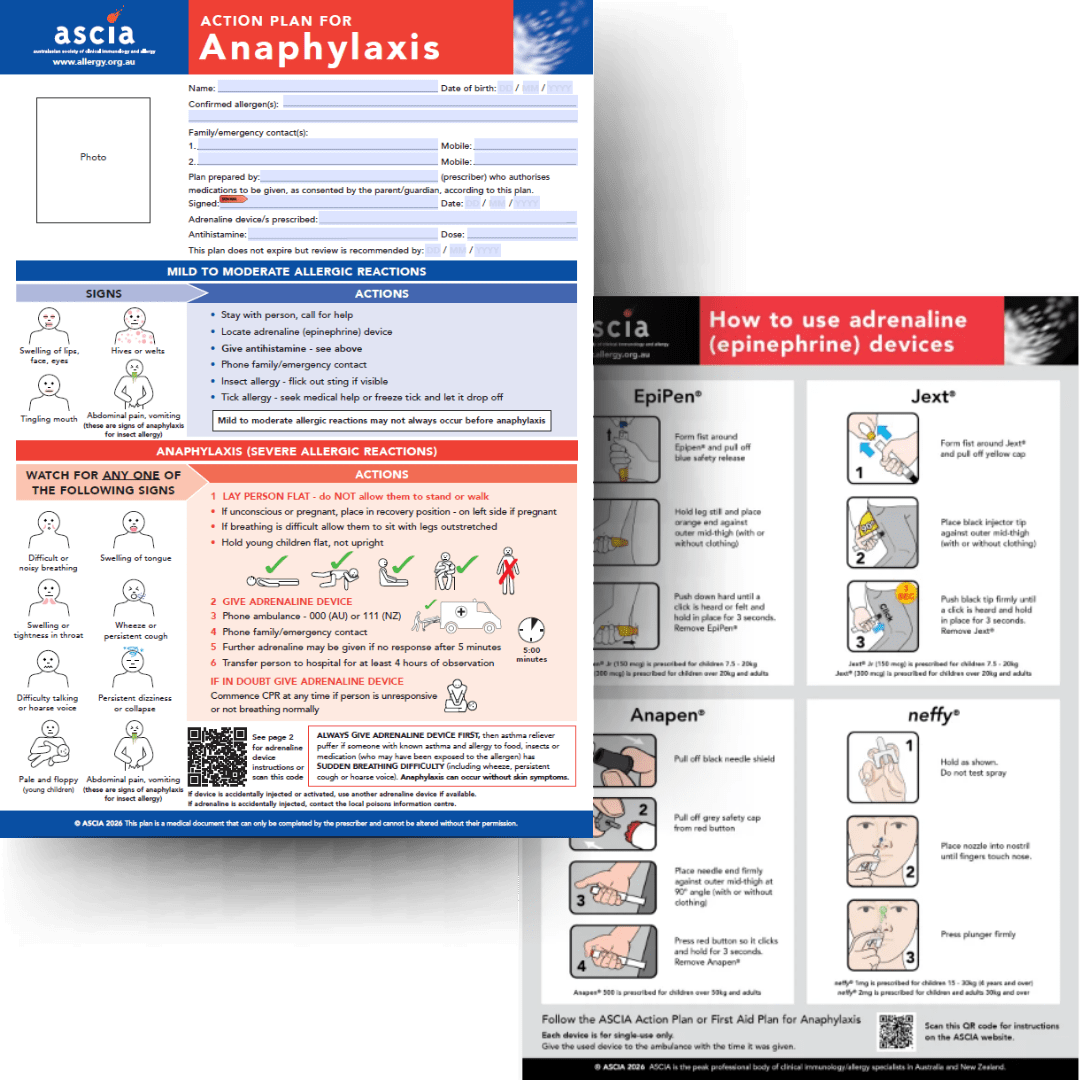
ASCIA Action Plan for Anaphylaxis
The ASCIA Action Plan for Anaphylaxis is for people who have been prescribed an adrenaline device. It outlines:
- Which allergens to avoid
- Signs of mild to moderate and severe allergic reactions
- Actions to take
- How to give an adrenaline device
- Emergency contact details
The ASCIA Action Plan for Anaphylaxis should be stored with a person’s adrenaline device.
Why do you need to go to hospital after anaphylaxis?
It is recommended you go to hospital during or after anaphylaxis even if you now feel well. This for a number of reasons, such as making sure the signs and symptoms of anaphylaxis do not return (biphasic reaction), making sure you have access to an adrenaline device, having a clear plan on what allergen to avoid and what to do when you are discharged including which doctor you should see after you leave the hospital.
What is a biphasic reaction?
- A biphasic reaction is when the signs and symptoms of anaphylaxis return after initially resolving. This occurs without further allergen exposure. This usually happens within 4 hours, which is why people should be observed in hospital for this long.
- The biphasic reaction can be less severe, equally severe, or more severe than the initial reaction. Biphasic reactions are thought to occur following 3 – 20% of anaphylactic reactions.
Why would I need to stay overnight at the hospital?
According to the Acute Anaphylaxis Clinical Care Standard, you may need to stay in hospital for longer than 4 hours if
- you have received more than one dose of adrenaline to treat your anaphylaxis
- you have a history of severe asthma
- you have arrived late in the evening
- you live alone or a long way from healthcare services
- your adrenaline injector cannot be replaced before you get home, and you do not have another one
Key points of what you should expect in hospital
On arrival at the hospital the patient will:
- Be assessed by hospital staff
- Not be left alone
- Lie flat and not stand or walk. If sitting in a chair, legs should be outstretched resting on another chair, not hanging down. If the patient is a baby or child being held by an adult, they must be held in a horizontal, not an upright position. Legs must not be hanging down
- Stay at the hospital for a minimum of 4 hours after the last dose of adrenaline
Before leaving hospital you should get:
- Information about what could have caused the severe allergic reaction and how to avoid it
- An ASCIA Action Plan if you don’t have a current one or it needs updating
- Advice to see your general practitioner (GP) in the following day or two and information on how to make an appointment with an allergy specialist
- Advice about wearing special jewellery (necklace or bracelet) that says you have an allergy
- An adrenaline device or a prescription for this medicine if there is a risk of having anaphylaxis again. If you are given a prescription, it is very important that you go to a pharmacy to get the adrenaline device as soon as possible, preferably on the way home from hospital
- Training on how to give the adrenaline device you have been prescribed. This should be done prior to discharge from hospital by medical or nursing staff. This may also be done at the pharmacy when you are getting your two adrenaline devices
Please note that the Acute Anaphylaxis Clinical Care Standard has not been updated since the nasal adrenaline device has entered the Australian market.
The Acute Anaphylaxis Clinical Care Standard outlines the care that you should get from paramedics, nurses, and doctors in a healthcare setting if you experience or are at risk of anaphylaxis. The standard is made up of 6 statements that explain the importance of recognising and treating anaphylaxis quickly, treating it the right way and providing the patient with the right information before they are discharged.
The information below details the six Quality Statements and what each of them means for someone who is at risk of anaphylaxis.
1) Prompt recognition of anaphylaxis
What the standard says:
A patient with acute-onset clinical deterioration with signs or symptoms of an allergic response is rapidly assessed for anaphylaxis, especially in the presence of an allergic trigger or a history of allergy.
What this means for you:
If you have symptoms that could mean you are having an allergic reaction; you will be assessed to see if you are experiencing anaphylaxis.
If you have an allergy or have had anaphylaxis before, it’s important to let your nurse or doctor know.
2) Immediate injection of intramuscular adrenaline
What the standard says:
A patient with anaphylaxis, or suspected anaphylaxis, is administered adrenaline intramuscularly without delay, before any other treatment including asthma medicines. Corticosteroids and antihistamines are not first-line treatment for anaphylaxis.
What this means for you:
If a nurse or doctor believes you are experiencing anaphylaxis, they will immediately give you adrenaline.
If you recognise the signs of anaphylaxis yourself, use your adrenaline device (if prescribed) without delay and call for help immediately. If you’re not sure, it’s safer to use your adrenaline device than to wait for symptoms to get worse.
The adrenaline should work within 5 minutes. If you don’t start to feel better after 5 minutes, use a second adrenaline device, if you have one.
Always follow the instructions on your ASCIA Action Plan if you have one.
3) Correct patient positioning
What the standard says:
A patient experiencing anaphylaxis is laid flat or allowed to sit with legs extended if breathing is difficult. An infant is held or laid horizontally. The patient is not allowed to stand or walk during, or immediately after, the event until they are assessed as safe to do so, even if they appear to have recovered.
What this means for you:
When you are experiencing anaphylaxis, you will be advised to lie flat. If breathing is difficult, you may sit with your legs outstretched. If you feel faint, your legs may be elevated. If you’re pregnant, you should lie on your left side to ensure continued blood circulation to your body. An infant should be held horizontally across your body. Do not hold an infant upright or over your shoulder.
If you have had adrenaline, do not stand or walk anywhere, even to the bathroom, ambulance or emergency department, until a nurse or doctor has said it’s safe for you to do so. This is usually a minimum of one hour after one dose of adrenaline or 4 hours if more than one dose is given.
4) Access to a personal adrenaline device in all healthcare settings
What the standard says:
A patient who has an adrenaline device has access to it for self-administration during all healthcare encounters. This includes patients keeping their adrenaline device safely at their bedside during a hospital admission.
What this means for you:
If you have a personal adrenaline device and know how to use it, you should:
- Keep your adrenaline device close by while you’re being treated in a health service, hospital, ambulance, or clinic. For example, if you’re admitted to hospital, keep it at your bedside for you or staff to use if necessary.
- Tell your healthcare team that you have an adrenaline device and arrange with them to keep it near you during your care.
- Keep the adrenaline device with your ASCIA Action Plan for Anaphylaxis in an unlocked location that you can easily reach.
If you believe you are having an allergic reaction and experience symptoms such as breathing difficulties, faintness, swelling of your tongue or tightness in your throat while in a healthcare service, lie down (or sit with your legs outstretched if breathing is difficult), use your adrenaline device as soon as possible and alert a staff member immediately. If a staff member is not close by, you can use your call button which is by your hospital bed if you can safely reach it. It is important that you do not stand up and walk to get help.
5) Observation time following anaphylaxis
What the standard says:
A patient treated for anaphylaxis remains under clinical observation for at least 4 hours after their last dose of adrenaline, or overnight as appropriate, according to the Australasian Society of Clinical Immunology and Allergy Acute Management of Anaphylaxis guidelines. Observation timeframes are determined based on assessment and risk appraisal after initial treatment.
What this means for you:
When you have been treated for anaphylaxis with adrenaline you will be kept under clinical observation for at least 4 hours after the last dose of adrenaline.
In some cases, you may need to be admitted overnight for observation after having anaphylaxis.
When you have been treated for anaphylaxis, you will be kept under clinical observation for at least four hours after the last dose of adrenaline. Adrenaline has a short duration of action and wears off quickly.
Occasionally, some people have another episode of anaphylaxis without coming in contact with their allergic trigger and require further treatment with adrenaline. This is called ‘biphasic anaphylaxis’. A clinician will review your risk of recurrence of anaphylaxis and re-exposure before you are discharged.
In some cases, you may need to be admitted overnight for observation after having anaphylaxis if:
- you have received more than one dose of adrenaline to treat your anaphylaxis
- you have a history of severe asthma
- you have arrived late in the evening
- you live alone or a long way from healthcare services
- your adrenaline device cannot be replaced before you get home and you do not have another one.
6) Discharge management and documentation
What the standard says:
Before a patient leaves a healthcare facility after having anaphylaxis, they are advised about the suspected allergen, allergen avoidance strategies and post-discharge care. The discharge care plan is tailored to the allergen and includes details of the suspected allergen, the appropriate ASCIA Action Plan, and the need for prompt follow-up with a general practitioner and clinical immunology/allergy specialist review. Where there is a risk of re-exposure, the patient is prescribed a personal adrenaline device and is trained in its use. Details of the allergen, the anaphylactic reaction and discharge care arrangements are documented in the patient’s healthcare record.
What this means for you:
Before you leave hospital, your nurse or doctor will speak to you about how you can manage your allergy and reduce your future risk of anaphylaxis in the community. They will also make sure you know what to do to stay safe when you go home.
Before you are discharged from a hospital or healthcare service, it is important you receive:
- Information about your allergic trigger (allergen) and how to avoid it
- An ASCIA Action Plan that includes information about:
- how to recognise the signs of an allergic reaction, including anaphylaxis
- correct positioning of the patient
- how to use the adrenaline device, if prescribed
- calling an ambulance by dialing triple zero (000)
- further adrenaline if no improvement after 5 minutes
- Training by medical or nursing staff on how to use the adrenaline device you have been prescribed
- Advice to make an appointment and see your general practitioner (GP)
- Information on how to arrange an appointment with an allergy specialist. If this is your first anaphylaxis emergency, the specialist will help to confirm the cause of your anaphylaxis and advise you about how to manage your allergy. If you already have a regular specialist, arrange to see them for follow-up.
- Advice about wearing special jewellery to identify that you have an allergy.
If you’re at risk of re-exposure to the allergen trigger, you will also be given a personal adrenaline device or a prescription for this medicine. If you’re given a prescription, go to a pharmacy to get the adrenaline device as soon as possible, preferably on your way home from the hospital. The adrenaline device should always be kept with you or your carer.
More resources
For further information on best practice in recognising and treating anaphylaxis in healthcare settings see the Acute Anaphylaxis Clinical Care Standard. It outlines what you should expect while you are in hospital, including what you need before you go home.
Five key steps to stay safe if you have allergies and are at risk of anaphylaxis
Awareness is key to managing your risk of anaphylaxis:
1. Know your allergens
- People with allergies and their caregivers need to be educated on how to avoid their allergens.
- You can never remove all risks but you can reduce the risk of having anaphylaxis and be prepared for when accidents happen
2. Know the symptoms of anaphylaxis
- Use the ASCIA Action Plan to help you recognise the signs and symptoms of a mild to moderate allergic reaction and the signs and symptoms of anaphylaxis.
- As accidental exposure to your allergen can happen even though you are careful. People with allergies and their carers need to be able to recognise signs and symptoms of allergic reactions and know what to do.
3. Know what to do when they experience signs and symptoms of anaphylaxis
- Quick action saves lives
- Follow instructions on the ASCIA Action Plan for Anaphylaxis.
- Position the person and give an adrenaline device as directed on the ASCIA Action Plan.
You may wish to wear a medical identification bracelet or necklace. This may help first aiders or health professionals understand what is happening in an emergency.
Be informed and empowered, but try not to be fearful. If your fear stops you from doing everyday activities, get help to manage your anxiety. Read more about managing anxiety here.
Avoidance
People at risk of anaphylaxis are advised to avoid their allergens.
For more information on reducing risk or avoidance see the individual type of allergy below.




After anaphylaxis:
An allergic reaction or anaphylaxis can cause lot of stress for the people involved and sometimes people find it hard to remember what happened.
Not being able to remember the details of the allergic reaction makes it difficult when talking about it with your doctor. Writing down what happened can be helpful, especially if it is weeks or months before you see your doctor.
Soon after the anaphylaxis, write what happened when you/your child had the severe allergic reaction.
ASCIA has developed an Anaphylaxis Event Record to help you keep a record of what happened. This information can be given to your GP and your allergy specialist when you next visit them.
For more information see Anaphylaxis Event Record – Australasian Society of Clinical Immunology and Allergy (ASCIA).
Anxiety and allergy
Dealing with anxiety can be a challenge for many people with allergies, especially if you are at risk of anaphylaxis. Learn about additional support available, living with risk and more.

Call Allergy & Anaphylaxis Australia for help and support
You don’t have to navigate allergy alone. Our trained Allergy Educators are here to listen, answer your questions and provide free, confidential support and evidence-based information to help you understand and manage allergic conditions.
Call an Allergy & Anaphylaxis Australia Allergy Educator on 1300 728 000 or use our contact us form.
Please note we do not provide medical advice. If you need medical advice, speak with your GP or allergy specialist.
Once you have recovered from the emergency and been discharged from hospital, it may help to talk with one of our Allergy Educators about the allergic reaction and how the emergency was managed.
If you think the allergic reaction was caused by a packaged food that is incorrectly labelled or you had an allergic reaction when eating food served after telling food service staff about your food allergy, contact A&AA so we can help you with Reporting an Allergic Reaction. It is important to report the allergic reaction to help prevent others from experiencing anaphylaxis to the same packaged food or at the same restaurant.
Key points about anaphylaxis:
- Anaphylaxis is the most severe form of allergic reaction.
- It can be life threatening and needs to be treated quickly.
- Know your allergens and how to avoid them where possible.
- Use your ASCIA Action Plan to help recognise the signs and symptoms of a mild or moderate allergic reaction and the signs and symptoms of anaphylaxis.
- Know what to do if anaphylaxis happens – follow instructions on your ASCIA Action Plan.
- Always carry (and know how to use) an adrenaline device.
- If you are not sure if it is anaphylaxis, give the adrenaline device.
- When treated quickly and correctly, most people get better after having anaphylaxis.
Talk with your doctor or nurse practitioner for information on allergic reactions and emergency treatment. Most importantly, make sure that the information you rely on is up to date and from a reliable source.
You can reduce risk of anaphylaxis and treat it when it happens. Work with your doctor or nurse practitioner to help identify your allergens and create a management plan so that you feel confident to live your life. You will need to do some things a little differently to help keep you safe but you should not have to miss out because of your allergy and risk of anaphylaxis
Learn more about anaphylaxis
Related information
View All PagesCauses of anaphylaxis
Webinars
View All WebinarsPersonal stories about experiencing anaphylaxis
View All StoriesUnderstanding allergy care
Learn about allergy care, seeing an allergy specialist, the Australian health system, treatment options and more.
Developed as part of the Shared Care for Allergy Project, in collaboration with the National Allergy Council through funding from the Australian Government, Department of Health, Disability and Ageing.