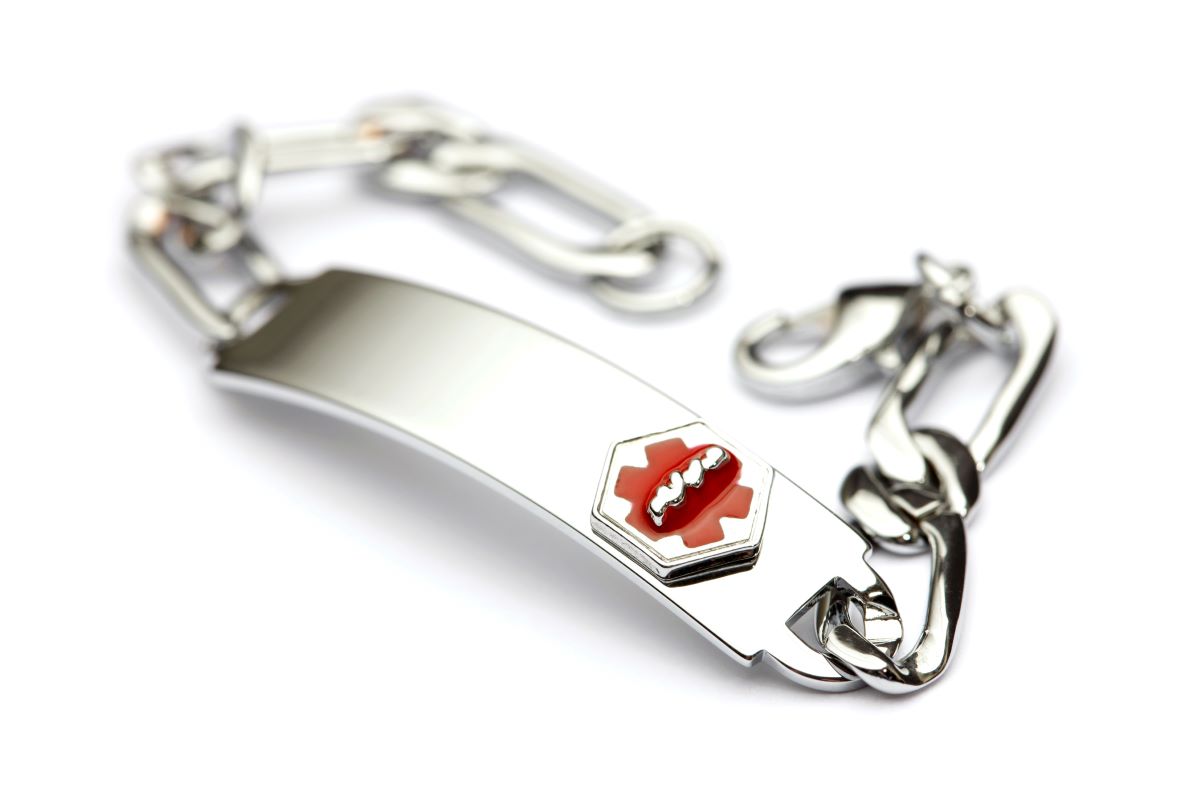
Allergy & Anaphylaxis Australia recommends wearing medical identification jewellery for people at risk of anaphylaxis. It is especially important to wear medical identification jewellery if your anaphylaxis is caused by latex, medication or insect stings.
Medical identification jewellery is available for adults and children in a range of styles, including bracelets, necklaces, and dog tags. There are many brands available.
Why wear medical identification jewellery?
- If you collapse, are unable to speak, or have difficulty communicating, information about your allergy can be found on your medical identification jewellery, helping others to assist you appropriately.
- If people helping you recognise that your symptoms may be caused by a severe allergic reaction, they can look for your adrenaline device and administer it if needed. Healthcare professionals, including paramedics, can quickly identify that you have a severe allergy if you are wearing medical identification jewellery.
Latex and medication allergy
- If you have a medication or latex allergy, it is important to wear medical identification jewellery. In an emergency, if you are unable to communicate, healthcare professionals can be alerted to your allergy and avoid using latex products or medications that may trigger an allergic reaction. This may be particularly important following a car accident, head injury, or loss of consciousness.
Insect allergy
- Anaphylaxis caused by insect stings often occurs more rapidly than food-induced anaphylaxis and is more likely to result in collapse. For this reason, it is particularly important for people with an insect allergy to wear medical identification jewellery, as they may be unable to communicate their allergy during an emergency.
Learn more about anaphylaxis
Related information
View All PagesCauses of anaphylaxis
Webinars
View All WebinarsPersonal stories about experiencing anaphylaxis
View All StoriesUnderstanding allergy care
Learn about allergy care, seeing an allergy specialist, the Australian health system, treatment options and more.
Developed as part of the Shared Care for Allergy Project, in collaboration with the National Allergy Council through funding from the Australian Government, Department of Health, Disability and Ageing.

Preparing for an emergency
Learn more about preparing for a severe allergic reaction (anaphylaxis) and what to expect if you or a loved one experiences anaphylaxis.