On this page:
Management of insect allergy
If you have been diagnosed at risk of anaphylaxis to an insect sting or bite:

ALWAYS carry your ASCIA Action Plan for Anaphylaxis and your adrenaline device/s with you and know how to use it.
Be prepared for an emergency.

Wear medical identification jewellery such as a bracelet or necklace that says you have an insect allergy.
If you collapse or are very unwell, the medical jewellery will let people helping you know of your allergies.

Reduce risk of insect stings and bites
There is an increased risk of insect stings and bites during spring and summer because there are more insects around and people are often outdoors wearing less clothing. It is important for people with insect allergy to try to prevent insect bites and stings all year round. While there is always the risk of an insect sting/bite, there are things people can do to reduce the risk.
Cover exposed skin as much as possible:
- Wear light-coloured clothing that covers arms and legs
- Wear shoes and socks that cover feet and ankles when outside
- If you are in a place that has lots of ants, wear boots and thick clothing such as denim jeans and tuck bottom of jean legs into thick socks
- When gardening, wear gloves, long sleeves, and long pants. Tuck your shirt into pants and pants into socks so insects are less likely to crawl in under your clothes.
Avoid disturbing insect nests:
- Bee, wasp and ant mounds/nests should be removed by a professional. This includes at workplaces, schools and childcare centres
- Bee, wasp and ant mounds/nests should be removed when the person with the allergy is not there
- Wasps normally nest in walls, logs and underground
- Ant nests can be less obvious and not noticed until they are disturbed
Other ways to reduce risk:
- Keep food and drinks (cup/bottle/glass/can) covered and indoors if possible
- When outdoors, always check your food and drinks for insects before you eat or drink
- Avoid perfumes/aftershave or body creams/deodorants which have a smell
- Avoid picking up rubbish which may attract insects
- Be careful around lakes/ponds/dams/swimming pools
- Keep car/bus/train windows closed
- Keep lids on garbage bins
- Keep grass areas mowed (reduce flowering weeds such as clover which attracts bees)
- Use insect repellents that contain DEET (Diethyltoluamide, N, N – diethyl – 3- methylbenzamide). Insect repellent may help reduce some stings/bites but does not work for all insects
How to educate yourself
Free online training
> ASCIA anaphylaxis e-training to learn about recognising and treating anaphylaxis
How to inform others
It is important to talk with family, friends, teachers, carers or work colleagues about your insect allergy to help them understand and support you. Things to talk about include:
- Where your adrenaline device and ASCIA Action Plan are kept
- How to recognise and treat an allergic reaction including anaphylaxis
- Free online training

Treatment of insect stings or bites
Treatment for large local reactions
- Use a cold or ice pack – this may reduce pain, itch and swelling. Ice packs can be wrapped in a cloth before applying and should not be placed directly on skin
- Oral non-sedating antihistamines – these can help to reduce itch
- Pain medications - paracetamol or nonsteroidal anti-inflammatory drugs such as ibuprofen can help reduce pain
Swelling usually goes away in a few days.
When to see a doctor for large local reactions
- If the sting or bite is very painful, and if it does not settle down within a few hours
- If the swelling or itching gets worse after 24–48 hours
- If the area gets redder, hot or more painful as this may indicate infection and need antibiotics
- If you are worried for any reason
Very large and painful local reactions may need corticosteroids such as prednisolone to settle the swelling.
Treatment for a severe allergic reaction (anaphylaxis)
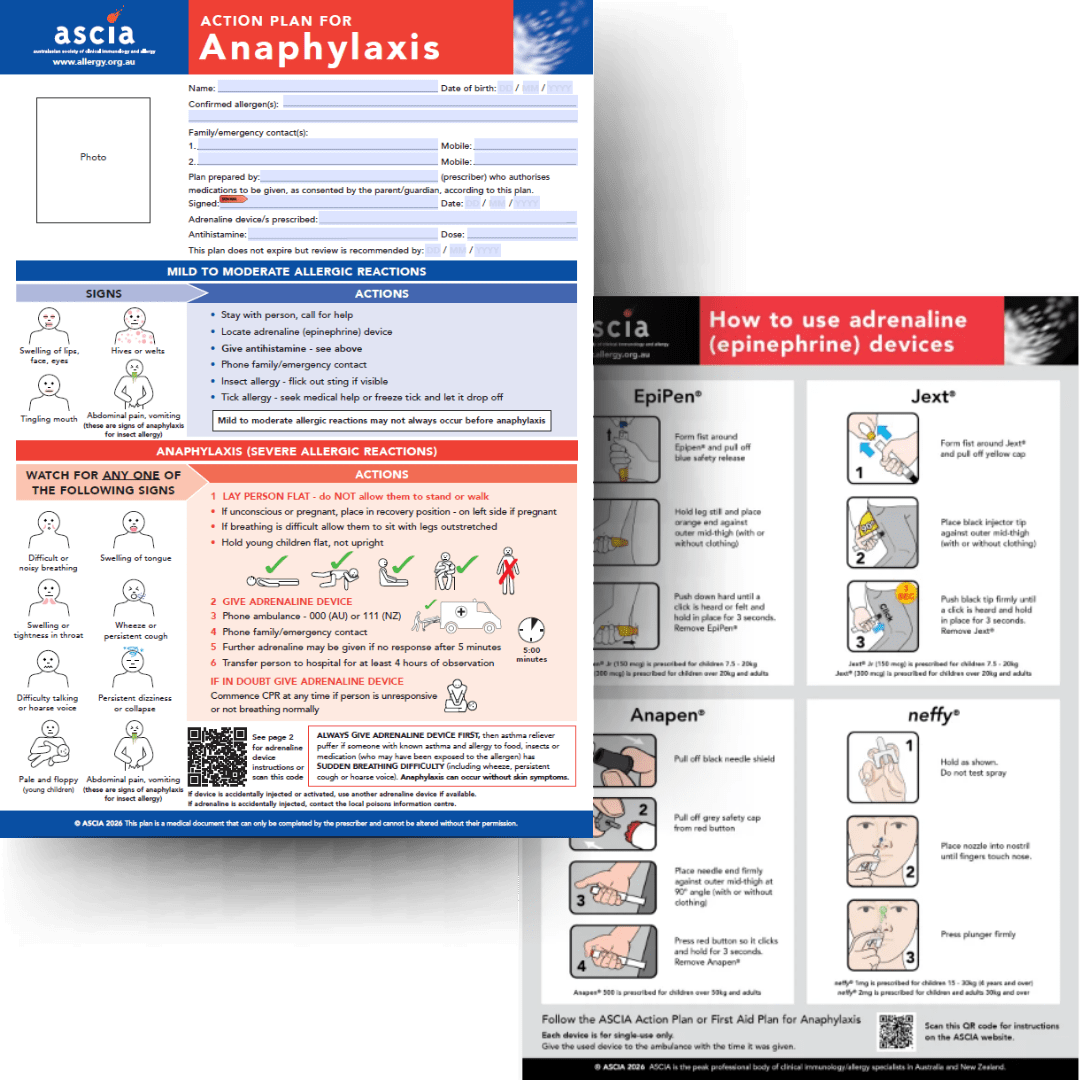
If you have any signs of anaphylaxis, follow the instructions on your ASCIA Action Plan for Anaphylaxis.
ASCIA Action Plan for Anaphylaxis
The ASCIA Action Plan for Anaphylaxis is for people who have been prescribed an adrenaline device. It outlines:
- Which allergens to avoid
- Signs of mild to moderate and severe allergic reactions
- Actions to take
- How to give an adrenaline device
- Emergency contact details
The ASCIA Action Plan for Anaphylaxis should be stored with a person’s adrenaline device.
What is venom immunotherapy (VIT)?
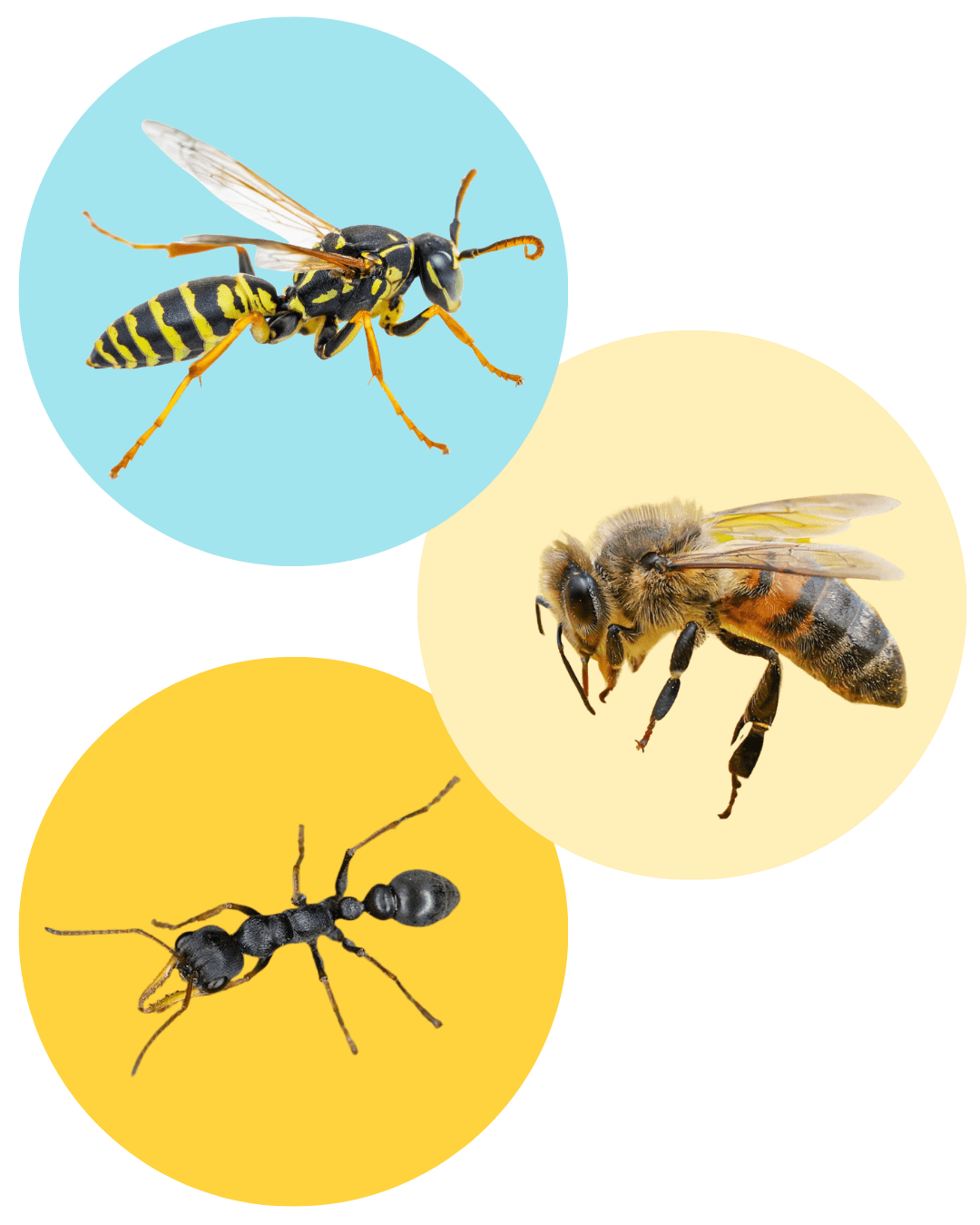
Venom immunotherapy, also known as desensitisation, can help to switch off allergy over time and this is an effective treatment for allergies to bee, wasp and Jack Jumper Ant stings. The duration of treatment is usually at least three to five years and involves regular injections under the skin.
Venom immunotherapy can reduce risk of anaphylaxis to future insect stings and may be indicated if you have had previous anaphylaxis to insect stings or if you are an adult who has experienced a generalised urticarial reaction to an insect sting. An allergy specialist can determine whether VIT is indicated and oversee treatment.
Anaphylaxis emergency treatment
Learn what to do in an emergency if you or someone you are with is showing signs of an allergic reaction or anaphylaxis.
Removal of bee stings
- Flicking the stinger out quickly (not squeezing it) may reduce the amount of bee venom injected.
- Use the edge of your fingernail, a car key or credit card to flick out the stinger. For more click here.
Learn more about insect allergy
What is anaphylaxis?
Related information
Understanding allergy care
Learn about allergy care, seeing an allergy specialist, the Australian health system, treatment options and more.
Developed as part of the Shared Care for Allergy Project, in collaboration with the National Allergy Council through funding from the Australian Government, Department of Health, Disability and Ageing.